


Story
AI-drafted from public sources — may contain mistakes, especially specific dates, names, or claims. Only "Good to know" above is field-checked.
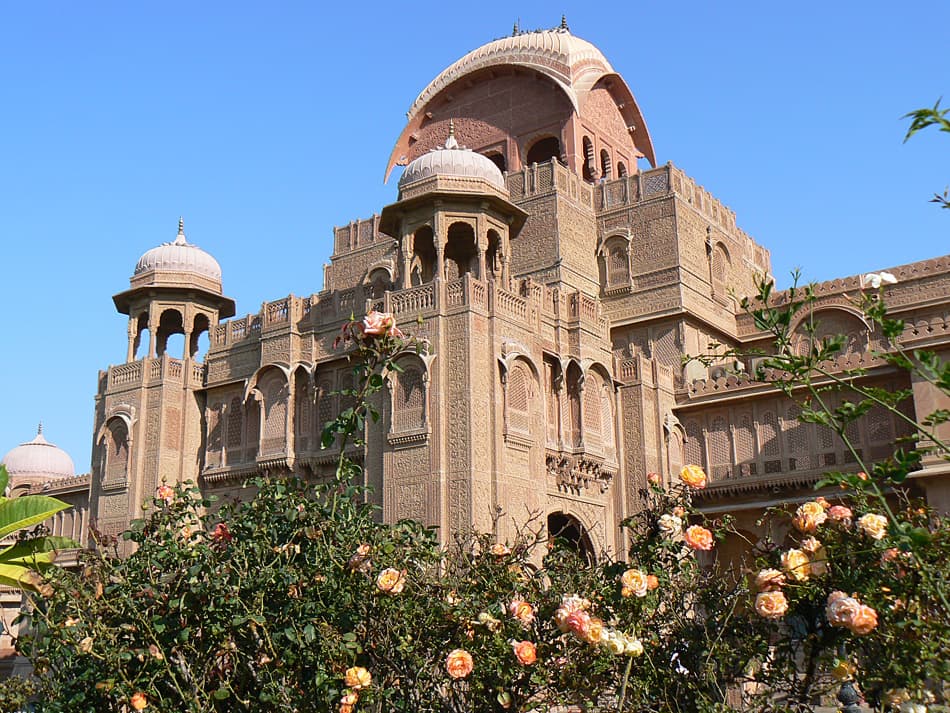
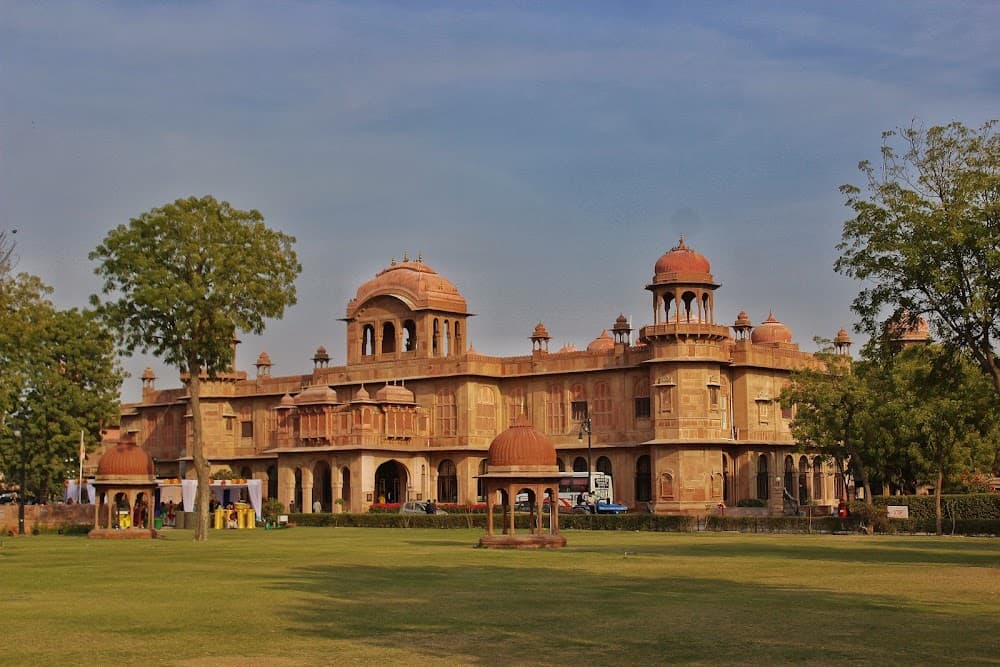
Lalgarh Palace, a majestic fort in Bikaner, Rajasthan, is a testament to the region's rich architectural heritage. Built in a style typical of Rajput and Mughal architecture, with European influences, the palace's grandeur is evident in its imposing scale and ornate details. The palace's structure is characterized by its use of red sandstone and marble, with intricate carvings and ornate inlays adorning its walls and ceilings. The complex is arranged around two courtyards, with the Laxmi Niwas wing, completed in 1902, being the most impressive and ornate of the five wings that make up the palace.
Tradition holds that Lalgarh Palace, a majestic fort in Bikaner, Rajasthan, is a testament to the region's rich cultural heritage. According to local belief, the palace's Indo-Saracenic architecture, blending Mughal and European styles, is a reflection of the region's storied past. This grand edifice, built between 1902 and 1926, is said to have been commissioned by the British-controlled regency for Maharaja Ganga Singh, a legendary ruler known for his shikars, or hunts. The palace's intricate corridors, adorned with paintings and extraordinary artifacts, are said to evoke the opulence and grandeur of a bygone era.
Standing amidst the arid landscape of Rajasthan, Lalgarh Palace rises like a majestic sentinel, its intricate blend of Rajput, Mughal, and European architectural styles a testament to the region's rich cultural heritage. This imposing structure, built between 1902 and 1926, was commissioned by the British-controlled regency for Maharaja Ganga Singh, and its grandeur is a reflection of the monarch's vision and opulence. As you approach the palace, you'll be struck by its imposing façade, adorned with intricate carvings and ornate details that whisper stories of a bygone era. The palace's sprawling complex, arranged around two courtyards, is a treasure trove of history, with each wing telling a tale of the region's storied past.
As you approach Lalgarh Palace in Bikaner, you'll be struck by its grandiose architecture, a blend of Rajput, Mughal, and European styles. The palace's imposing structure is best appreciated during the morning or late afternoon when the golden light of the setting sun casts a warm glow on its intricate carvings and ornate details. Wear comfortable shoes and be prepared to explore the palace's labyrinthine corridors and opulent chambers. It's a good idea to dress modestly, respecting the palace's rich cultural heritage. Typically, visitors reach Lalgarh Palace by taxi or auto-rickshaw from the city center, but you may also consider walking or taking a leisurely stroll along the nearby Dr. Karni Singhji Road. Remember to confirm the current timings and fees for the palace with local authorities or the venue directly, as these may be subject to change.