
Story
AI-drafted from public sources — may contain mistakes, especially specific dates, names, or claims. Only "Good to know" above is field-checked.
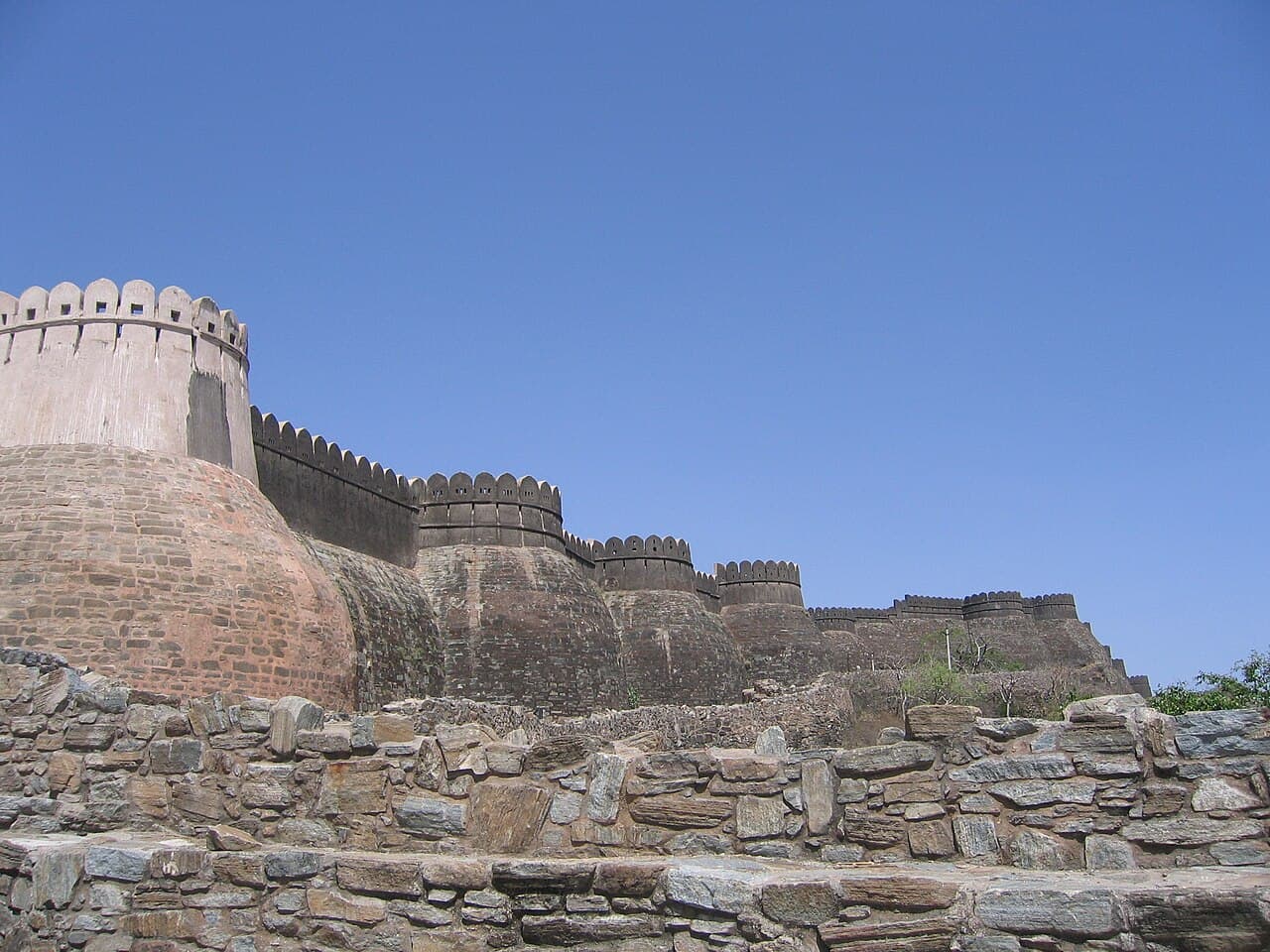
Perched atop the Aravalli Hills, Kumbhalgarh's fortress sprawls across the landscape, its rugged stone walls blending seamlessly with the surrounding terrain. Built in a style typical of Rajasthan's hill forts, the structure's imposing scale is tempered by the gentle curves of its battlements and the ornate carvings that adorn its walls. The fort's architecture is characterized by a mix of traditional Rajasthani and Mewar styles, with intricate stone carvings and colorful murals adding a touch of vibrancy to the overall design.
Local belief holds that Kumbhalgarh Fort, with its imposing 36-kilometer-long wall, is a sacred site where the divine and the mundane converge. Tradition says that the fort's construction, begun in the 15th century by Rana Kumbha, was a labor of love, undertaken to protect the people of Mewar from invaders and to honor the gods. The fort's architecture, a blend of medieval and Rajput styles, is said to have been inspired by the celestial abodes of the gods, with its intricate carvings, colorful murals, and majestic spires. For devotees, Kumbhalgarh is a place of spiritual pilgrimage, where one can seek blessings from the ancient temples and shrines that dot the landscape.
Perched atop the Aravalli Hills, Kumbhalgarh is a majestic fortress that commands attention with its sheer scale and storied history. This 15th-century stronghold, built by Rana Kumbha, is a testament to the region's rich cultural heritage and a must-visit destination for anyone seeking to immerse themselves in the region's storied past. As the birthplace of Maharana Pratap, the legendary king and military leader, Kumbhalgarh Fort is a place where history and mythology converge, its 36-kilometer-long walls whispering tales of bravery and conquest.
As you approach Kumbhalgarh, the imposing fortress on the western range of the Aravalli Hills, be prepared to be awed by its grandeur. The best time to visit is early morning or late afternoon, when the golden light of the setting sun casts a warm glow on the fort's imposing walls. Wear comfortable shoes and dress in layers, as the temperature can fluctuate significantly throughout the day. Bring a refillable water bottle and a hat to protect yourself from the sun. Before your visit, confirm the current timings and fees locally, as they may be subject to change. As you explore the fort, take your time to appreciate the intricate carvings, stunning architecture, and breathtaking views of the surrounding hills. Be sure to visit the Badal Mahal, with its grandeur, astounding architecture, and colorful murals, as well as the serene Neelkanth Mahadev Temple and the unique Muchchal Mahavir Temple.