
Story
AI-drafted from public sources — may contain mistakes, especially specific dates, names, or claims. Only "Good to know" above is field-checked.
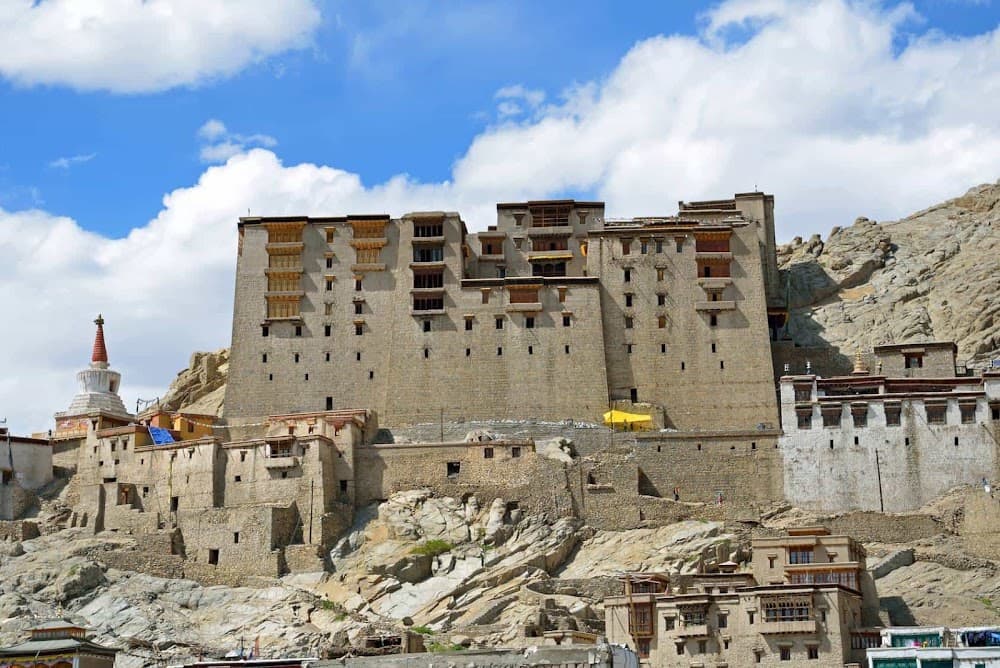
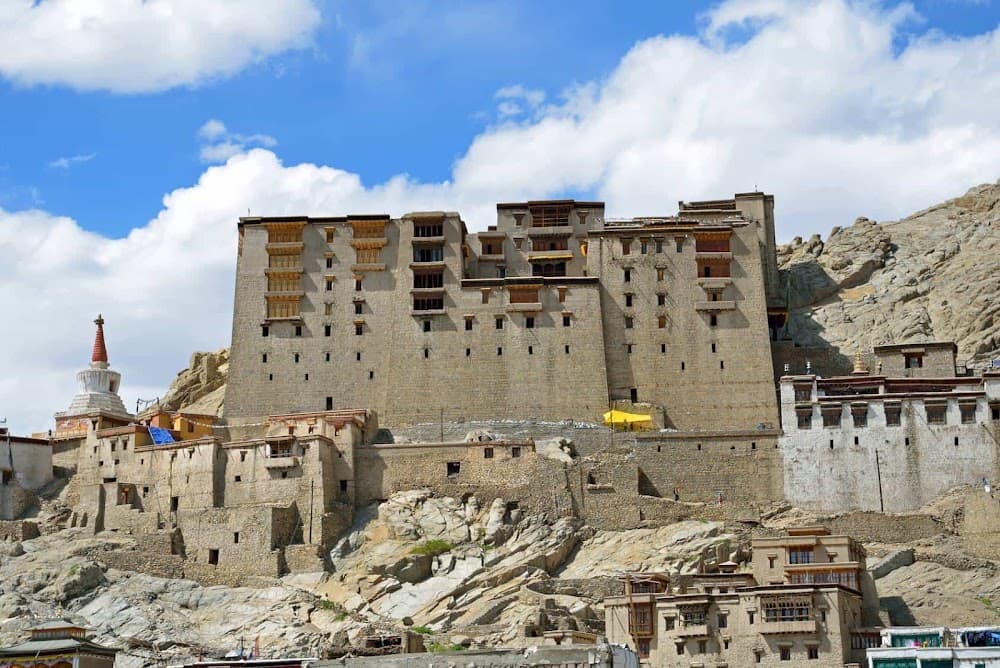
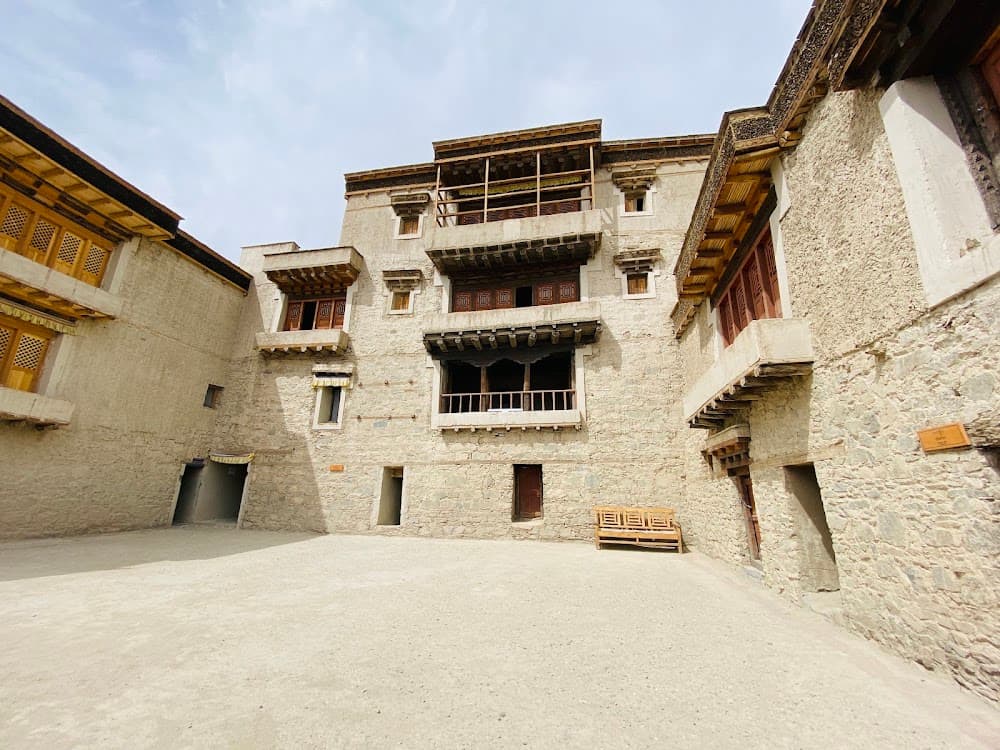
Leh Palace, a majestic fort in Leh, stands as a testament to the region's rich cultural heritage. Built in a style typical of Ladakhi architecture, this imposing structure is characterized by its sturdy stone walls, intricately carved wooden doors, and ornate frescoes adorning the walls. The palace's layout is a blend of functional and ornamental, with a central courtyard surrounded by a series of interconnected rooms and corridors. The scale of the palace is imposing, with its towering walls and imposing gateways that seem to stretch up to the sky. The style of ornamentation is a unique blend of Buddhist and Tibetan influences, with intricate carvings and frescoes depicting mythological scenes and deities.
The majestic Leh Palace is said to be a testament to the rich cultural heritage of the region. Tradition holds that the palace was built in the 17th century as a testament to the grandeur of the royal family that once ruled over the land. Local belief says that the palace was constructed on the ruins of an ancient fort, which was said to have been built by the great Buddhist king, Sengge Namgyal. According to tradition, the palace was a symbol of the king's devotion to the Buddha and his people, and it is said that he would often hold grand ceremonies and festivals within its walls. The palace is also believed to be a sacred site, where devotees would come to pay their respects to the Buddha and seek blessings.
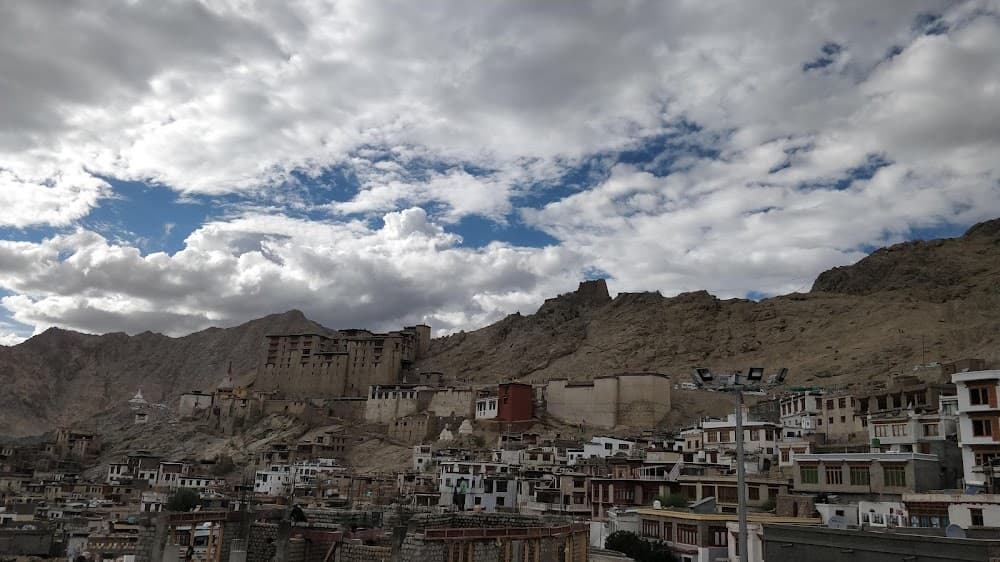
Perched on a hill overlooking the town of Leh, the majestic Leh Palace stands as a testament to the region's rich cultural heritage. This 17th-century fort is a striking blend of Tibetan and Indian architectural styles, with its nine-storey structure adorned with intricate carvings and vibrant murals. As you approach the palace, you can't help but be struck by its imposing presence, a reminder of the region's storied past. The palace is said to have been the royal residence of the Namgyal dynasty, and its halls and chambers are filled with stories of the region's history and mythology. Today, the palace serves as a museum, offering a glimpse into the lives of the people who once called Leh home.
As you approach Leh Palace, the majestic structure's imposing presence commands attention. The palace, a testament to the region's rich cultural heritage, is best explored during the morning or late afternoon when the golden light casts a warm glow on its ancient walls. Dress comfortably and wear layers, as the high-altitude climate can be unpredictable. Reach the palace by taking a leisurely stroll from the town center or by hopping on a local taxi. Be sure to check the current timings and entry fees in your travel app before planning your visit.