
Madurai
Temples, silk, and ancient rituals
Vibrant chants and drumbeats fill the crowded streets
Madurai, in Tamil Nadu.
Madurai is known for
Why Madurai is famous
- •State / river: Tamil Nadu; on the Vaigai, which divides the old city in the south from the newer north
- •Language: Tamil. Madurai Tamil is a distinct and widely recognised regional register.
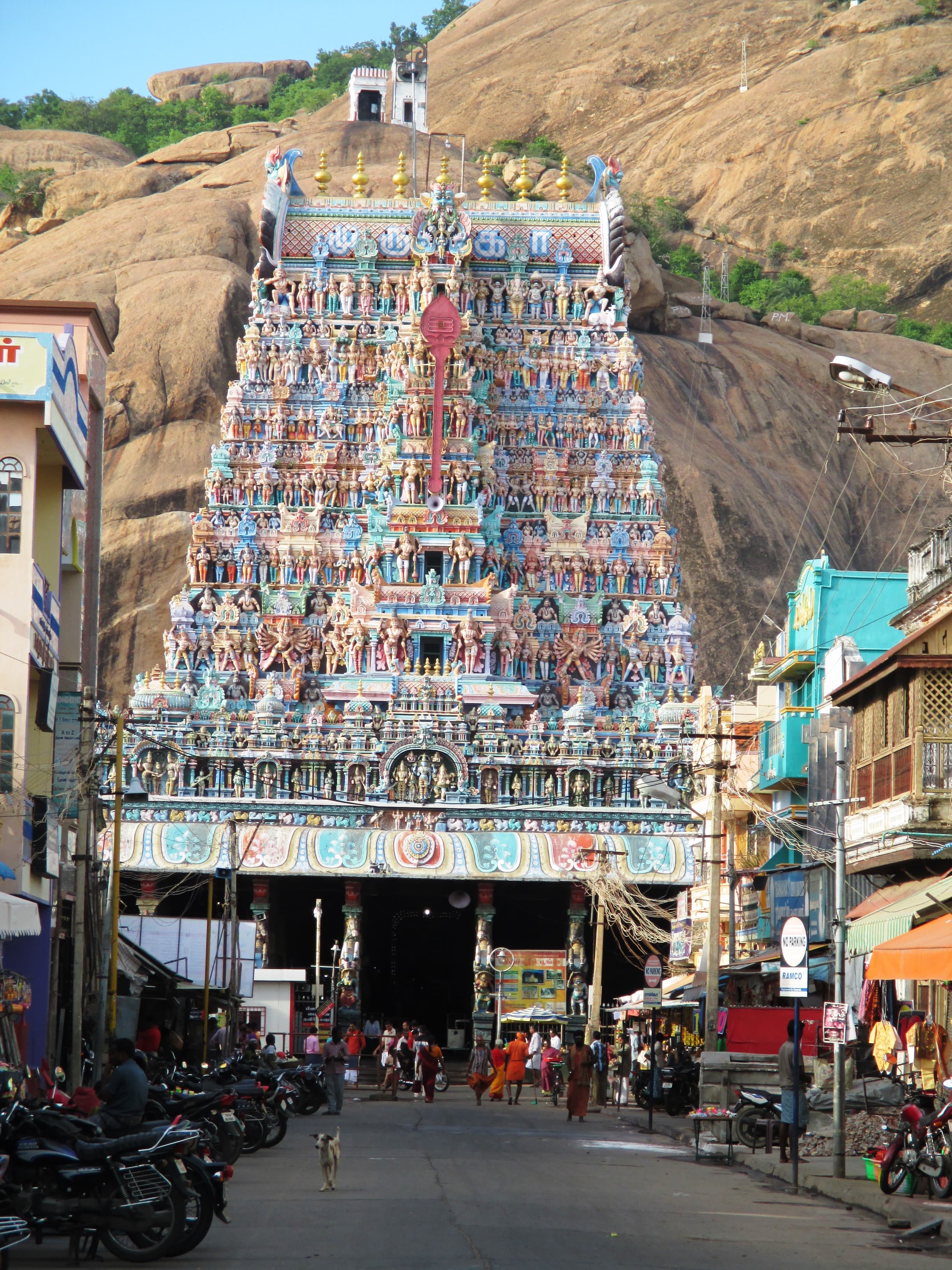
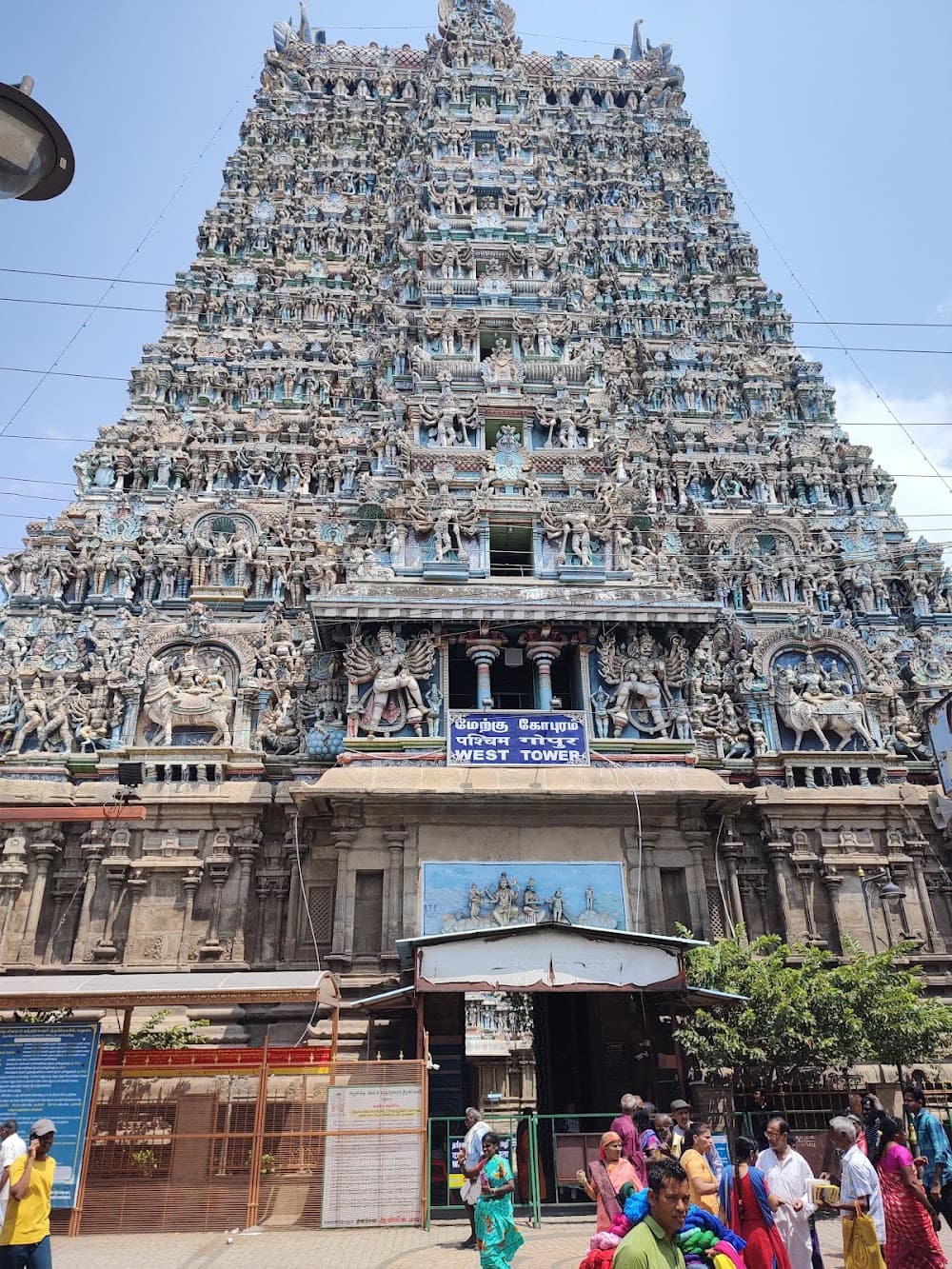
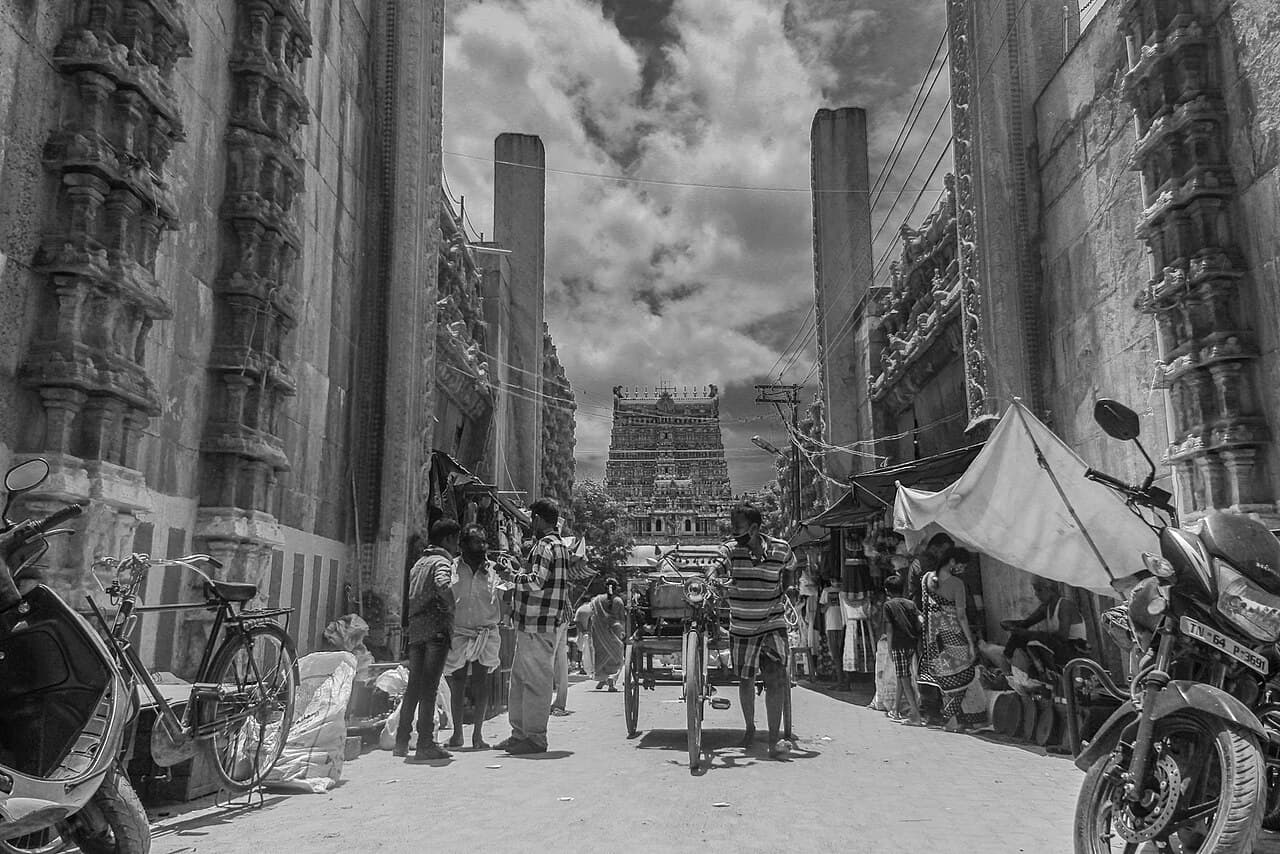
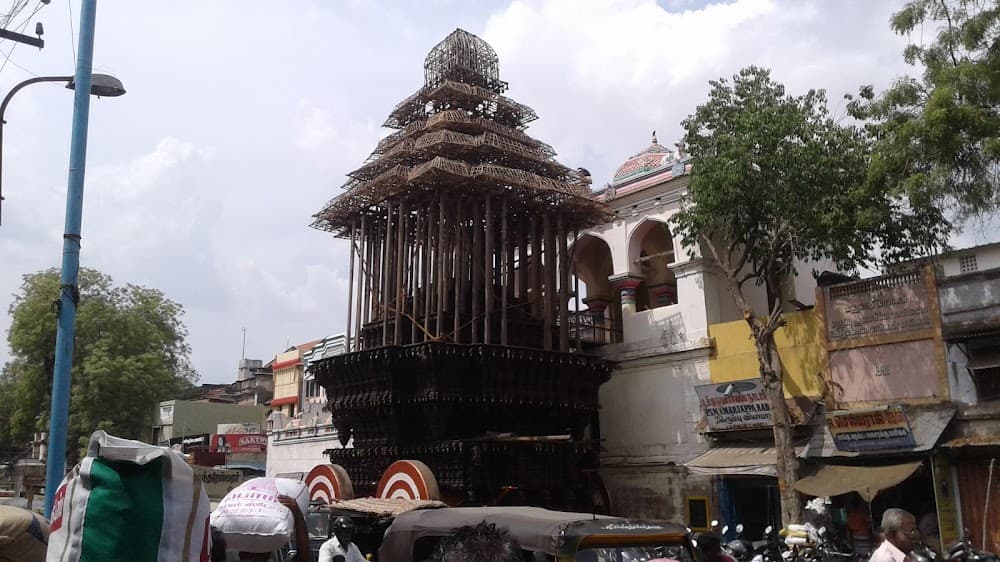
- •The organising fact: Madurai is built around the Meenakshi Amman Temple, which is the geographic and ritual centre. The old city is a set of concentric quadrangular streets radiating from the sanctum. Early Tamil literature describes the streets as radiating like a lotus and its petals.
- •The four street belts: Aadi, Chithirai, Avani Moola and Masi - each named for a Tamil month, each a square of four streets (North, South, East, West) around the temple. Street width decreases as the rings move outward, down to lanes as narrow as 0.6 m.
- •Who laid it out: Tamil tradition holds that Vishwanatha Nayaka, the first Madurai Nayak king (r. 1529-64), rebuilt the temple and the city around it after the 14th-century destruction, following Shilpa Shastra rules for urban planning. The old core is described as following the Rajdhani plan from the Manasara, in a fivefold concentric rectangular formation.
- •Veli Street: The city was enclosed by a fort wall and a moat. Under the British the wall was razed and the moat filled on the orders of Collector John Blackburn; the fill became Veli Street and its neighbours. Madurai became a municipality in 1866.
- •Why it matters for the product: In Varanasi the river organises the city; in Jaipur a grid does; in Madurai a temple does. A traveller who understands the rings can navigate Madurai without a map, because the street name tells you which ring you are on.
- •Founding tradition: Tradition holds Shiva came to earth as Sundareswarar to marry Meenakshi, an incarnation of Parvati born to the Pandya king Malayadwaja in answer to his penance. Their wedding is held to have been the greatest event on earth, with the world gathering at Madurai - and it is re-enacted annually as the Chithirai festival.
- •The Madurai marriage: Scholarship describes the Meenakshi-Sundareswarar marriage as a classic instance of a south Indian female-dominated marriage, referred to as a 'Madurai marriage', in deliberate contrast with the male-dominated 'Chidambaram marriage'. The goddess, not the god, is the sovereign here - which is why the city's temple carries her name.
- •The Golden Lotus Tank test: Tamil folklore holds that Potramarai Kulam judged the worth of new literature: a work thrown into the tank would float if it had merit and sink if it did not. Tradition ties the tank to the Sangam academies.
- •Sangam seat: Madurai is traditionally the seat of the Tamil Sangam academies under the Pandya kings. The Sangam age is conventionally placed between the 3rd century BCE and the 3rd century CE; the Keeladi finds have pushed proposed dates considerably earlier.
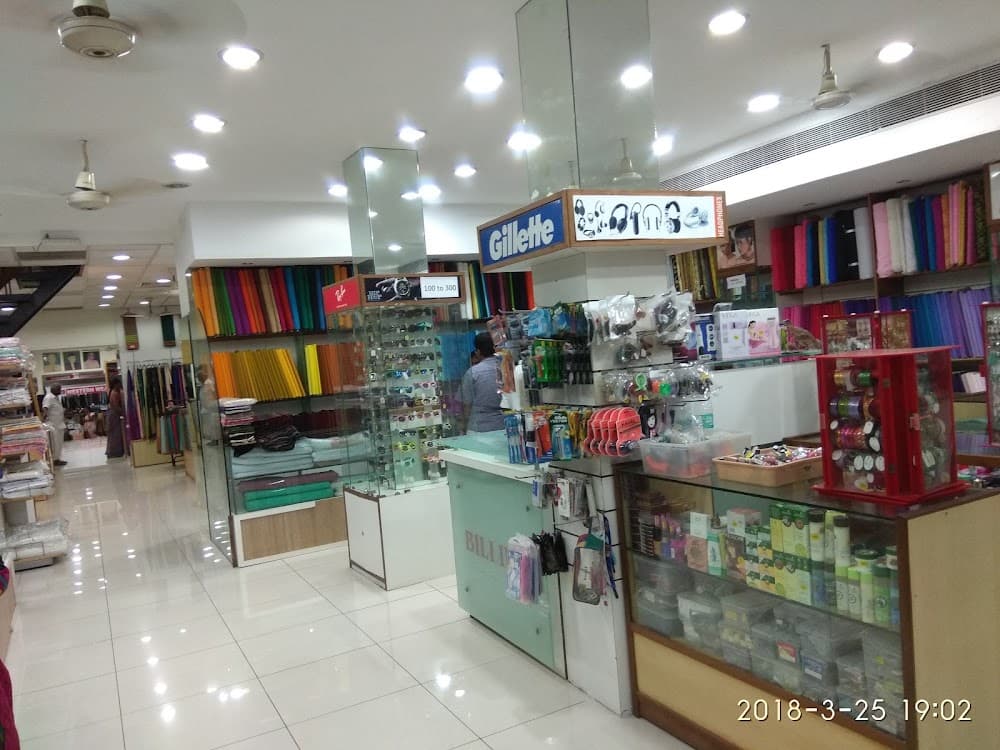
- •Madurai Sungudi: GI-registered in 2006. A cotton tie-and-dye textile traditionally made with natural dyes by the Saurashtra community, who migrated to Madurai under the patronage of Thirumalai Nayak in the 17th century. Thousands of tiny knots are tied by hand before dyeing, producing the characteristic dotted field.
- •Madurai Malli: GI-registered in 2012-13 and the first flower from Tamil Nadu to receive the status. Grown across Madurai, Virudhunagar, Theni, Dindigul and Sivaganga. Distinguished by deep fragrance, thick petals, the longest petiole and delayed bud opening, which gives it a longer shelf life. Peak season runs between the Tamil months of Chithirai and Aadi.
- •Malli is not a souvenir, it is an economy: Mattuthavani flower market trades up to 10 tonnes of flowers a day across more than 100 stalls, with Madurai Malli the star. The flower is also distilled for perfume. Naming only Sungudi as the city's specialty, as your live page does, misses the larger of the two.
- •Metalware and tailoring: Puthu Mandapam is a working market for aluminium, brass and bronze vessels and lamps, and for tailors who will cut and stitch a garment to measure within an hour or two - a genuinely distinctive Madurai offer with no equivalent in the other two cities.
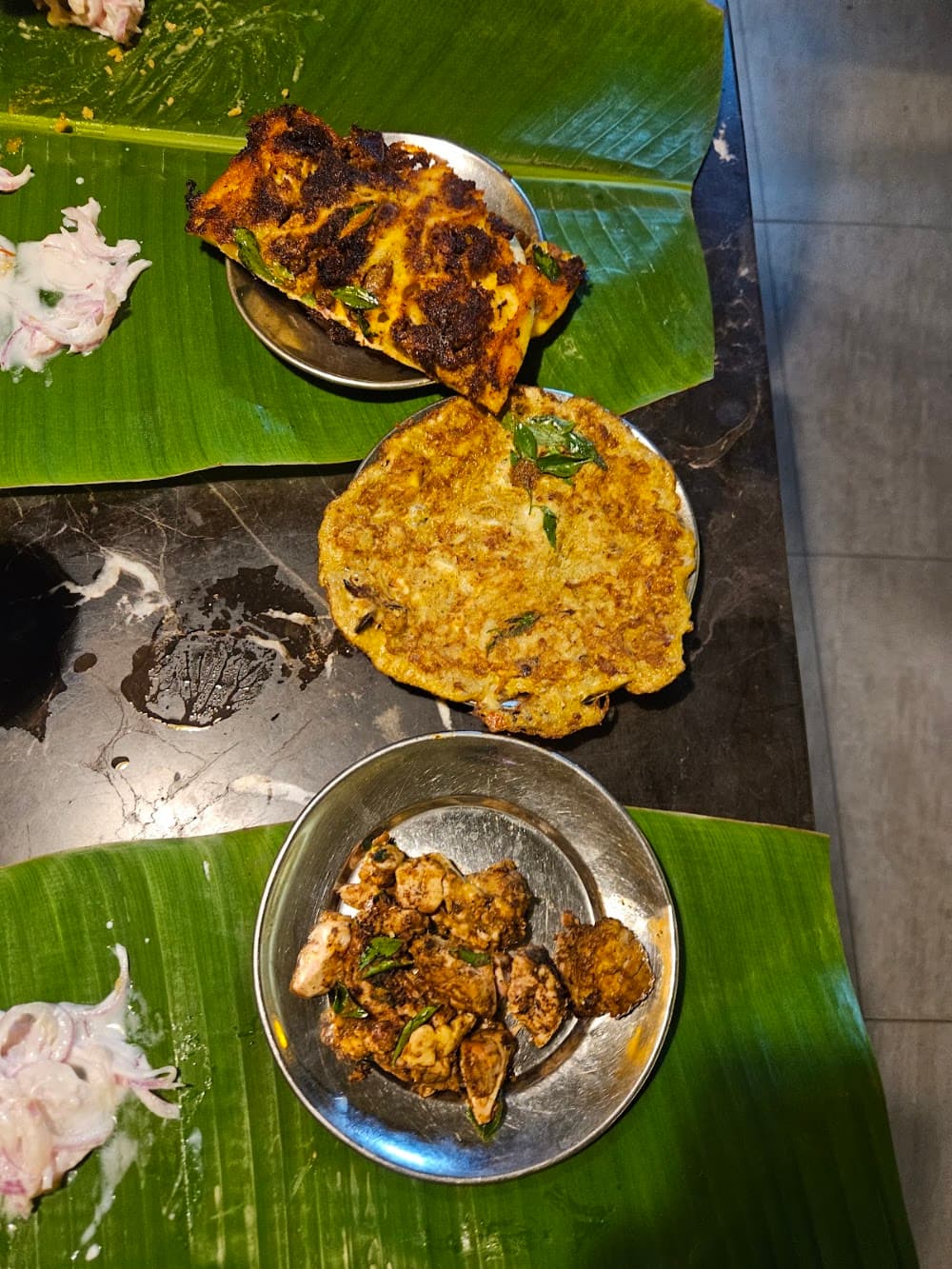
- •Origins worth telling: Kalkandu sadham is held to have been brought to Madurai by the Saurashtrian silk-weaving community - the same community behind Sungudi. The city's food culture is shaped by Saurashtrian migration and by the Madurai Sultanate period, which is why a temple city has this much mutton.
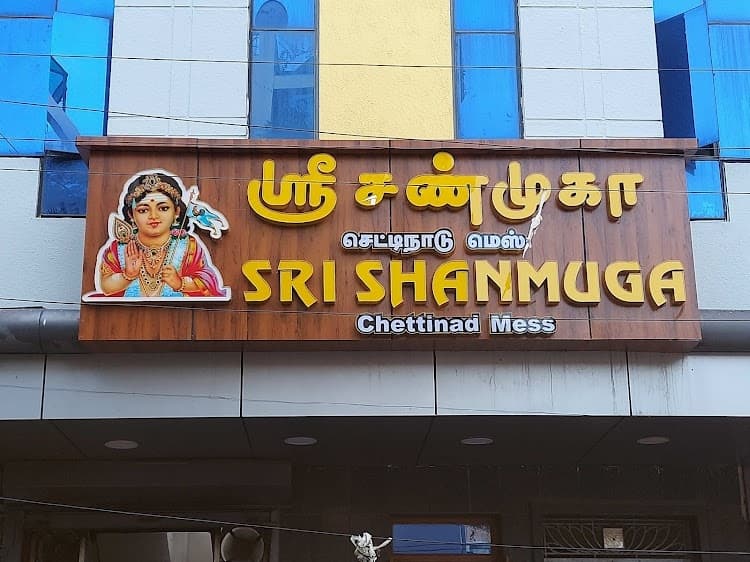
- •Thoonga Nagaram: Madurai's name as the city that never sleeps came from an all-night eating culture. Recent regulation has curtailed it, though family-run messes and stalls still run late. Say the current state, not the legend.
- •Best season: October to March for weather. But the city's defining experience is Chithirai in April-May, which is also the hottest time of year - a real trade-off to state plainly rather than hide.
AI-drafted from general knowledge — may contain mistakes.
Madurai at a glance
- ⚠️Temple photography rules vary by zone and cameras are commonly restricted inside
- ⚠️footwear must be left outside and the granite gets very hot by midday. Unofficial guides operate around the east gate. During Chithirai the old city is closed to vehicles for long stretches and crowds have exceeded a million.
History at a glance
- c. 580 BCE - 200 BCE (disputed) · SANGAMKeeladi, on the Vaigai about 12 km from Madurai, is an urban settlement with burnt-brick structures, drainage, water tanks, deep wells, and evidence of pottery, weaving, dyeing and bead-making. Dating is actively contested: published figures include 200 BCE, 6th century BCE and 800 BCE.
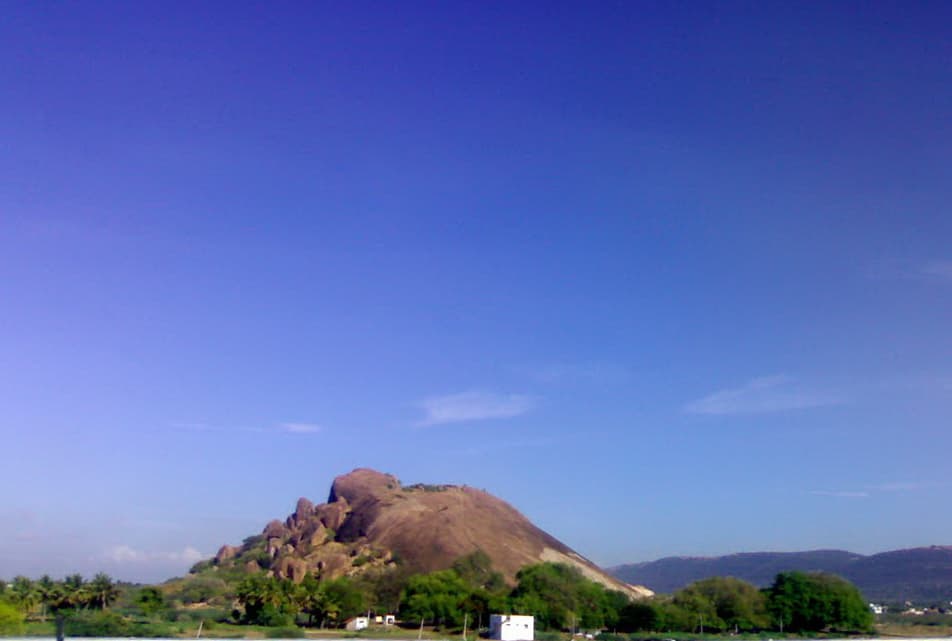
- 3rd c. BCE onward · SANGAMJain monks occupy rock beds at Samanar Malai west of the city, leaving Tamil-Brahmi inscriptions.
- 3rd c. BCE - 3rd c. CE · SANGAMThe Sangam period. Madurai is the Pandya capital and the traditional seat of the Tamil Sangam academies. Nakkeerar composes the Tirumurukarruppatai, which names the six abodes of Murugan.
- 6th c. CE · PANDYAThe rock-cut Subramaniya Swamy temple at Thiruparankundram is built by the Pandyas.
- by early 12th c. · PANDYAPotramarai Kulam, the Golden Lotus Tank, is in existence.
- 1310-1311 · SULTANATEMalik Kafur, general of the Delhi Sultanate, raids Madurai. The temple is plundered and the temple town destroyed; accounts say fourteen towers were brought down, leaving only the Sundareswarar and Meenakshi sanctums.
- 14th c. · SULTANATEThe temple stands closed and ruined for roughly sixty years.
- mid-14th to 15th c. · VIJAYANAGARAVijayanagara rulers take Madurai from the Sultanate and rebuild and reopen the temple core.
- 1529-1564 · NAYAKVishwanatha Nayaka, first of the Madurai Nayaks, rebuilds the temple and lays out the city around it on Shilpa Shastra principles - the concentric squares that survive today.
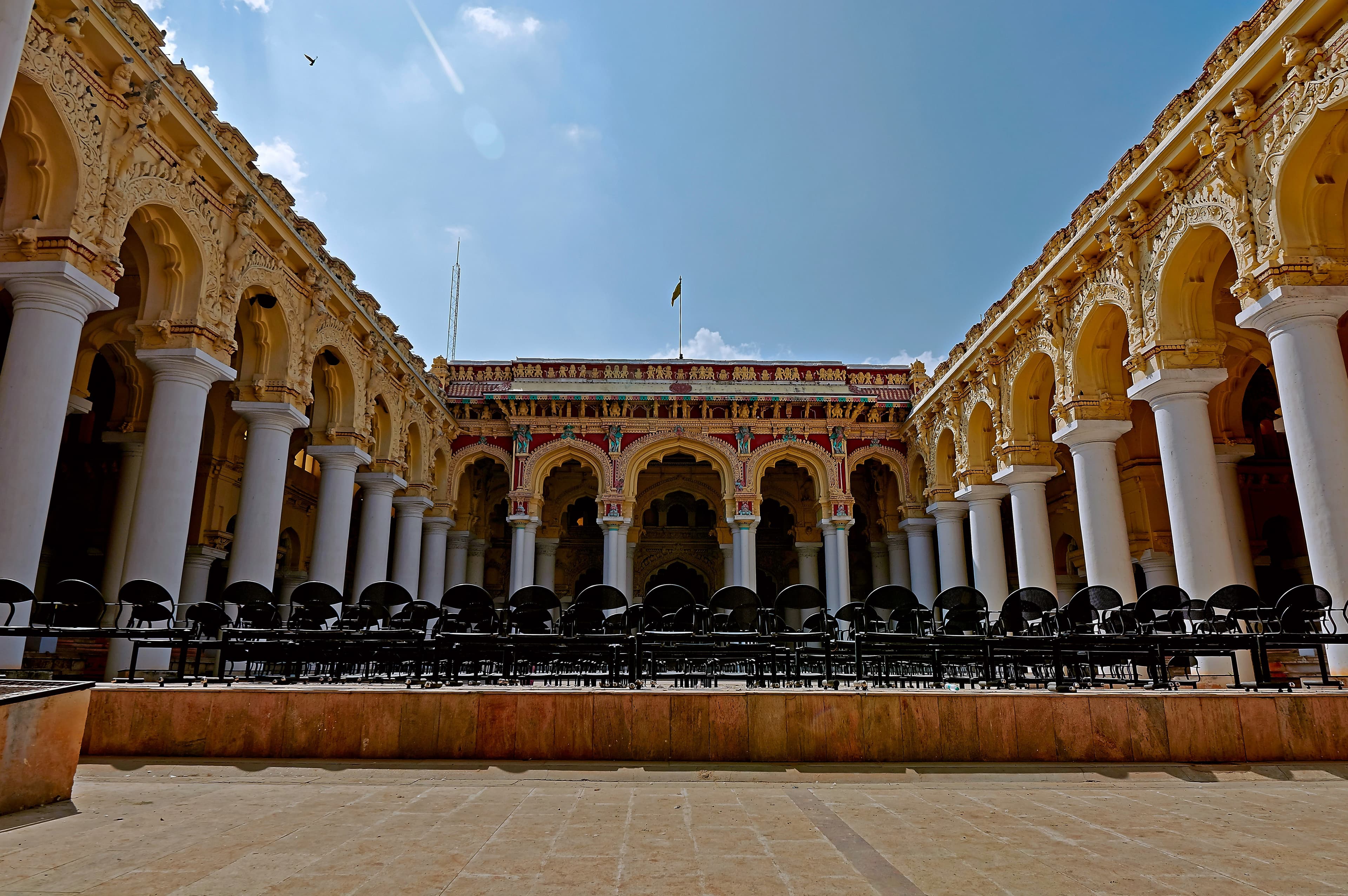
- 1569 · NAYAKThe Ayirakkal Mandapam, the Thousand Pillar Hall, is built by Ariyanatha Mudaliar, Vishwanatha Nayaka's general and chief minister. It has 985 pillars; his statue stands at the entrance.
- 1623-1659 · NAYAKReign of Thirumalai Nayak. He expands the temple further, builds the Vasantha Mandapam (Puthu Mandapam) and the Kilikoondu Mandapam, and raises his own palace. He brings the Saurashtra weaving community to Madurai under his patronage.
- c. 1670 · NAYAKRani Mangammal builds the Tamukkam palace, her summer residence. She also builds the corridors of the temple tank and the Meenakshi Nayakar Mandapam, and is remembered as a builder of roads, tanks and choultries.
- 1689-1704 · NAYAKRani Mangammal rules as queen regent for her infant grandson.
- 1736 · NAYAKThe Madurai Nayak dynasty ends, after thirteen rulers including two regent queens.
- early 19th c. · COLONIALThe British demolish the fort wall and fill the moat; the fill becomes Veli Street. Madurai is constituted a municipality in 1866.
- 1921 · COLONIALIt is at Madurai that Gandhi first adopts the loincloth as his permanent dress, in solidarity with India's poor.
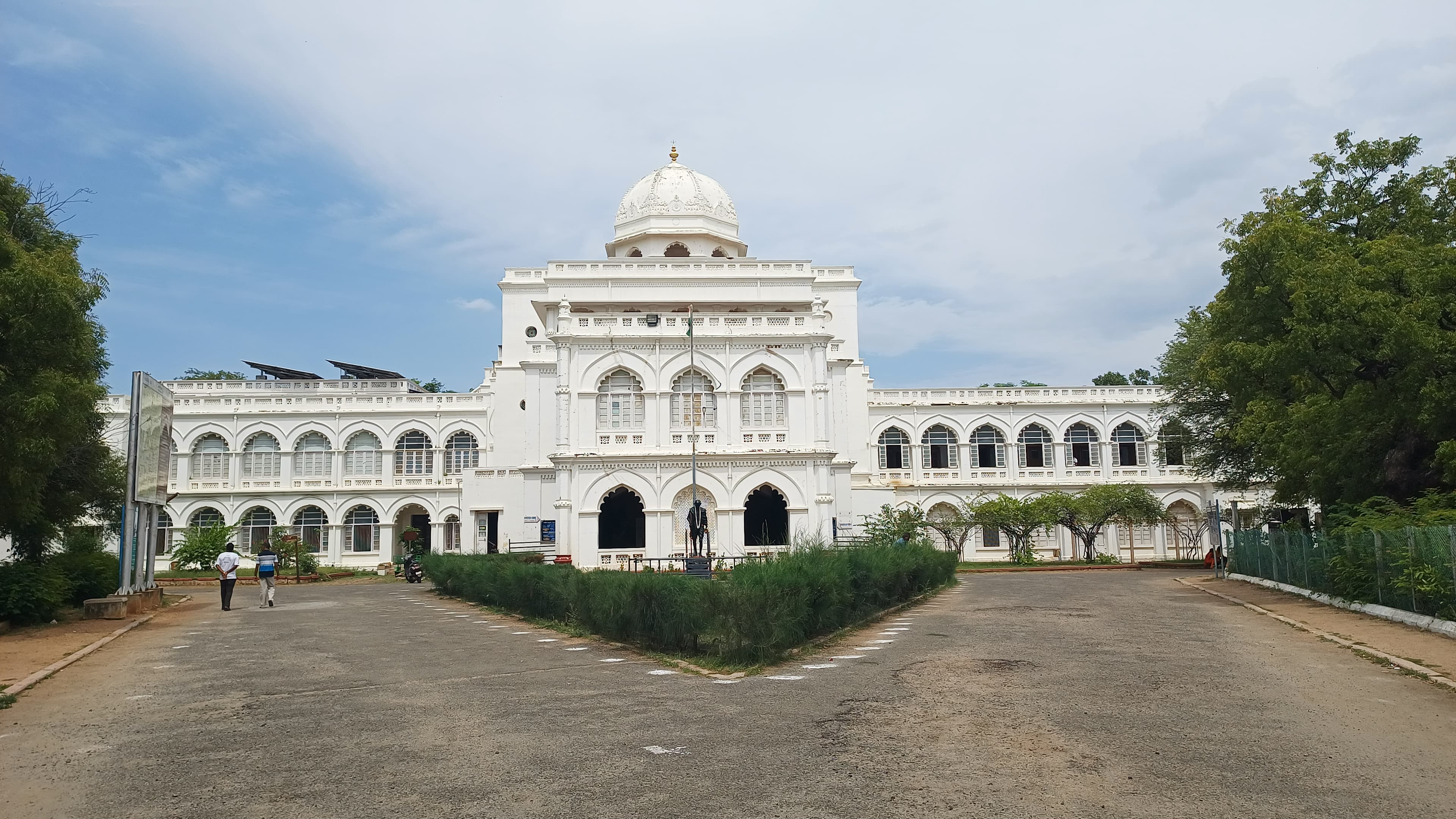
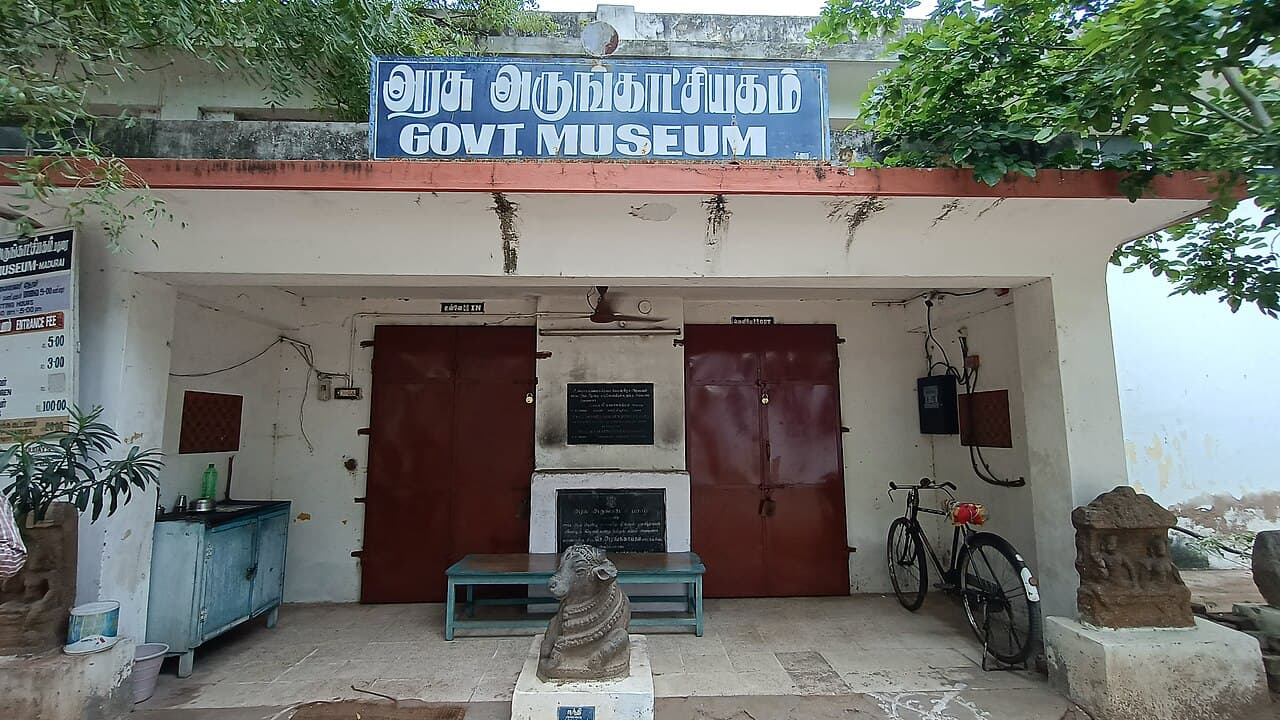
- 15 April 1959 · MODERNThe Gandhi Memorial Museum opens in the Tamukkam Palace, inaugurated by Jawaharlal Nehru. It holds part of the blood-stained garment Gandhi wore when he was assassinated.
- 2015 onward · MODERNExcavation begins at Keeladi, run first by the ASI and from the fourth phase by the Tamil Nadu State Department of Archaeology. Over 15,000 artefacts are recovered, including 56 Tamil-Brahmi inscribed potsherds.
- March 2023 · MODERNThe Keeladi museum opens, built on two acres at a cost of about Rs 18.43 crore.
- 2022-2025 · MODERNRenovation of the Gandhi Memorial Museum, budgeted at about Rs 10 crore, running behind schedule; roughly 80% complete as of May 2025.
Best time to visit
Madurai's climate is generally hot and dry during the summer months, with temperatures soaring during the peak summer season. The city experiences a moderate climate during the winter months, with a brief monsoon season bringing some relief from the heat around July to September.
- Chithirai Thiruvizha · Apr-May; in 2026 the schedule runs 19 April to 5 May · anchored to Tamil month of Chithirai; Thirukalyanam on the 10th dayThe city's defining event and a single festival with two halves. Flag hoisting opens it; Meenakshi's coronation and then the Thirukalyanam, her wedding to Sundareswarar, follow; then the chariot procession through the mada streets. Kallazhagar sets out from Azhagar Kovil, arrives too late for the wedding, enters the Vaigai on a golden horse vahanam, gives his gifts from mid-river rather than entering the city, and returns to the hill.
- Meenakshi Thirukalyanam · Apr-May; 28 April in the 2026 schedule · anchored to 10th day of ChithiraiThe celestial wedding itself, the centrepiece of Chithirai - NOT a separate festival in a different season.
- Kallazhagar Vaigai entry · Apr-May; 1 May in the 2026 schedule · anchored to Within Chithirai, two days after the weddingThe visual climax: Kallazhagar enters the Vaigai riverbed on the golden horse vahanam before enormous crowds. The moment that unites Shaiva and Vaishnava devotion in one event.
- Theppa Thiruvizha (Float Festival) · Jan-Feb · anchored to Thai Poosam / Thai full moonDeities are taken around the great tank on an illuminated float. The tank is filled for this and is otherwise dry for much of the year.
- Avani Moolam · Aug-Sep · anchored to Tamil month of AvaniA temple festival that gives one of the four mada street rings its name - the street and the festival are the same fact.
- Maha Shivaratri · Feb-Mar · anchored to Phalguna Krishna ChaturdashiObserved at the Sundareswarar sanctum with night-long worship.
- Navaratri · Sep-Oct · anchored to Ashvin Shukla Pratipada to NavamiNine nights for the goddess, in a temple where the goddess is sovereign.
- Thaipusam · Jan-Feb · anchored to Thai PusamOne of the principal Murugan festivals, observed at the first of the six abodes on Madurai's edge.
- Vaikasi Visakam · May-Jun · anchored to Vaikasi, Visakam starMurugan's birth star, observed at both of the Arupadai Veedu temples in this destination.
- Vasantham (spring festival) · Apr-May · anchored to VaikasiThe spring festival celebrated in the Vasantha Mandapam, which is what Puthu Mandapam was built for.
- In 12 daysGandhi Jayanti · 2 October
- In 29 daysDurga Ashtami / Maha Navami · 19 October
- In 30 daysDussehra (Vijayadashami) · 20 October
- In 39 daysKarwa Chauth · 29 October
Real dates, not AI-drafted — sourced from the Hindu Panchang, same for every destination.
Weather details and any festival without a stated lunar anchor above are AI-drafted from general knowledge, not independently verified — timing is approximate; double-check before planning around one.
Part of these sacred circuits
Near me
Share your location to see famous places closest to you right now.
Famous places in Madurai
Sacred & Spiritual
See all 65 →Heritage & Monuments
See all 49 →Nature & Outdoors
See all 14 →Shops & Restaurants
See all 80 →Places to Stay
Getting there & around
- Air — Madurai International Airport (about 12 km south)
- Rail — Madurai Junction, a major southern railway hub
- Road — NH-44 and NH-38. Periyar Bus Stand serves the city centre and Mattuthavani the intercity routes.
- Auto/Rickshaw — Auto-rickshaw and town bus. Inside the four mada streets the old city is walkable and the temple's four gopurams work as cardinal landmarks - which is the actual answer to 'how do I get around Madurai', and better than the generic line currently on the page.
What travellers actually paid
Reported by real travellers, not looked up — a real range with a count, never a single guessed number.
Loading…
Famous eateries & specialties
Sourced from city research where available, otherwise AI-drafted from general knowledge — double-check specifics before relying on it.