
Nalanda
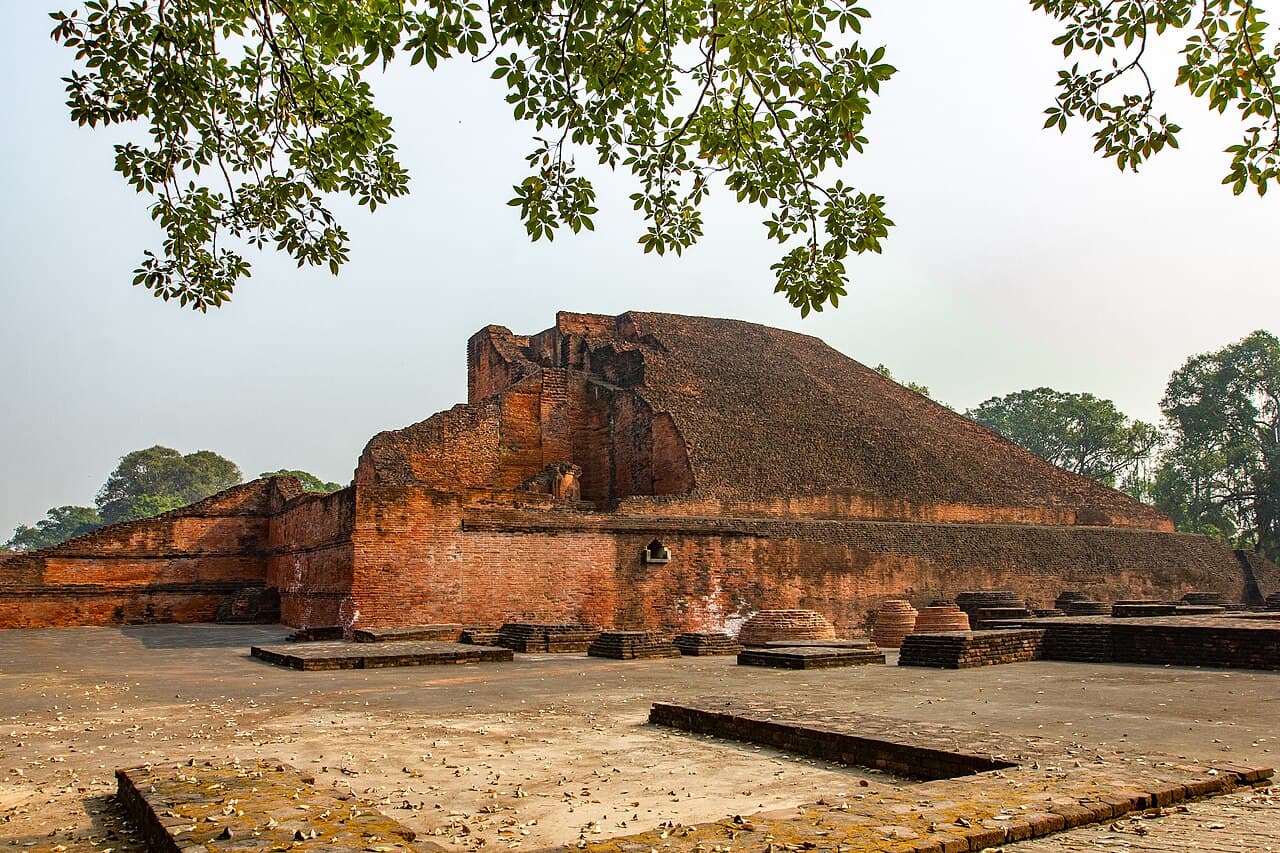
Nalanda's ancient ruins whisper tales of a bygone era, beckoning scholars, history buffs, and spiritual seekers to unravel the secrets of this once-thriving Buddhist monastic university. For centuries, students and teachers from across Asia converged on this sacred site, fostering a rich intellectual and cultural heritage that still resonates today. As a designated UNESCO World Heritage site, Nalanda's crumbling red-brick walls and tranquil surroundings offer a unique glimpse into India's storied past.
Why Nalanda is famous
- •The full record: WIKIPEDIA'S INFOBOX: official name 'Archaeological Site of Nalanda Mahavihara at Nalanda, Bihar'; criteria Cultural iv and vi; REFERENCE 1502; inscription 2016, 40th Session; inscribed area 23 ha (57 acres).
- •Two in ten: The same source reports rigorous ENTRANCE EXAMS where only 2 OUT OF 10 APPLICANTS were admitted, and that Xuanzang left detailed accounts of daily life, the debate culture, the library system and the exams.
- •What was taught: One source lists Buddhist philosophy, logic, grammar, medicine, astronomy and metaphysics. Another lists Mahayana, Hinayana, Sanskrit grammar, the Vedas and Samkhya. Students came from China, Central Asia, Korea and Tibet.
- •A named head of the institution: One source, citing TARANATHA, states that NAGARJUNA — the 3rd-century Mahayana philosopher — was chief of the institution, and that his contemporary SUVISHNU constructed around 108 temples in the area.
AI-drafted from general knowledge — may contain mistakes.
History at a glance
- 3rd century CETaranatha records Nagarjuna as chief of the institution, and Suvishnu building around 108 temples in the area.
- 427 CENalanda Mahavihara is founded under King Kumaragupta I.
- 5th-6th centuryThe Mahavihara prospers under Gupta patronage, and later under Emperor Harsha of Kannauj.
- 7th centuryXuanzang arrives and studies for five years, leaving detailed accounts of courtyards, classrooms, debate culture, the library and the entrance exams. I-tsing also visits.
- 9th centuryDevapala patronises Nalanda. A copper plate records an endowment by BALAPUTRA, MAHARAJA OF SRIVIJAYA; the Ghosrawan inscription records his patronage of the scholar Viradeva, who became head of the Mahavihara.
- Pala periodOne source says tantric tendencies in Buddhism during Pala rule saw an eventual decline. Another says other Buddhist centres emerged nearby, diverting attention.
- c. 1193-1200Bakhtiyar Khilji's army sacks Nalanda. The library, Dharmaganja, is reported to have burned for three months. One source says the site was destroyed three times by invaders, the last in 1193 by the Turkish army; Wikipedia dates the ransacking to c. 1200.
- c. 1400Wikipedia gives the site as abandoned around 1400 CE.
- 1915-1937The first systematic excavation campaign, under a named succession of archaeologists.
- 1951Nava Nalanda Mahavihara is established by Rajendra Prasad, first President of India, to revive Buddhist culture and education. It becomes a deemed university in 2006.
- 1974-1982A second excavation campaign.
- 2016UNESCO inscribes the Archaeological Site of Nalanda Mahavihara at the 40th Session, under cultural criteria iv and vi, reference 1502.
Best time to visit
- In 2 daysDiwali · 8 November
- In 4 daysGovardhan Puja · 10 November
- In 5 daysBhai Dooj · 11 November
- In 9 daysChhath Puja · 15 November
Real dates, not AI-drafted — sourced from the Hindu Panchang, same for every destination.
Part of these sacred circuits
Near me
Share your location to see famous places closest to you right now.
Famous places in Nalanda
Sacred & Spiritual
Heritage & Monuments
See all 9 →Civic & Services
Getting there & around
- Rail — About 95 km south-east of Patna. One source suggests a train from PATNA JUNCTION to BAKHTIYARPUR JUNCTION. Close to Rajgir — city 11 — which every itinerary pairs it with, though NO SOURCE I READ GAVE THE DISTANCE between them.
What travellers actually paid
Reported by real travellers, not looked up — a real range with a count, never a single guessed number.
Loading…