
Story
AI-drafted from public sources — may contain mistakes, especially specific dates, names, or claims. Only "Good to know" above is field-checked.
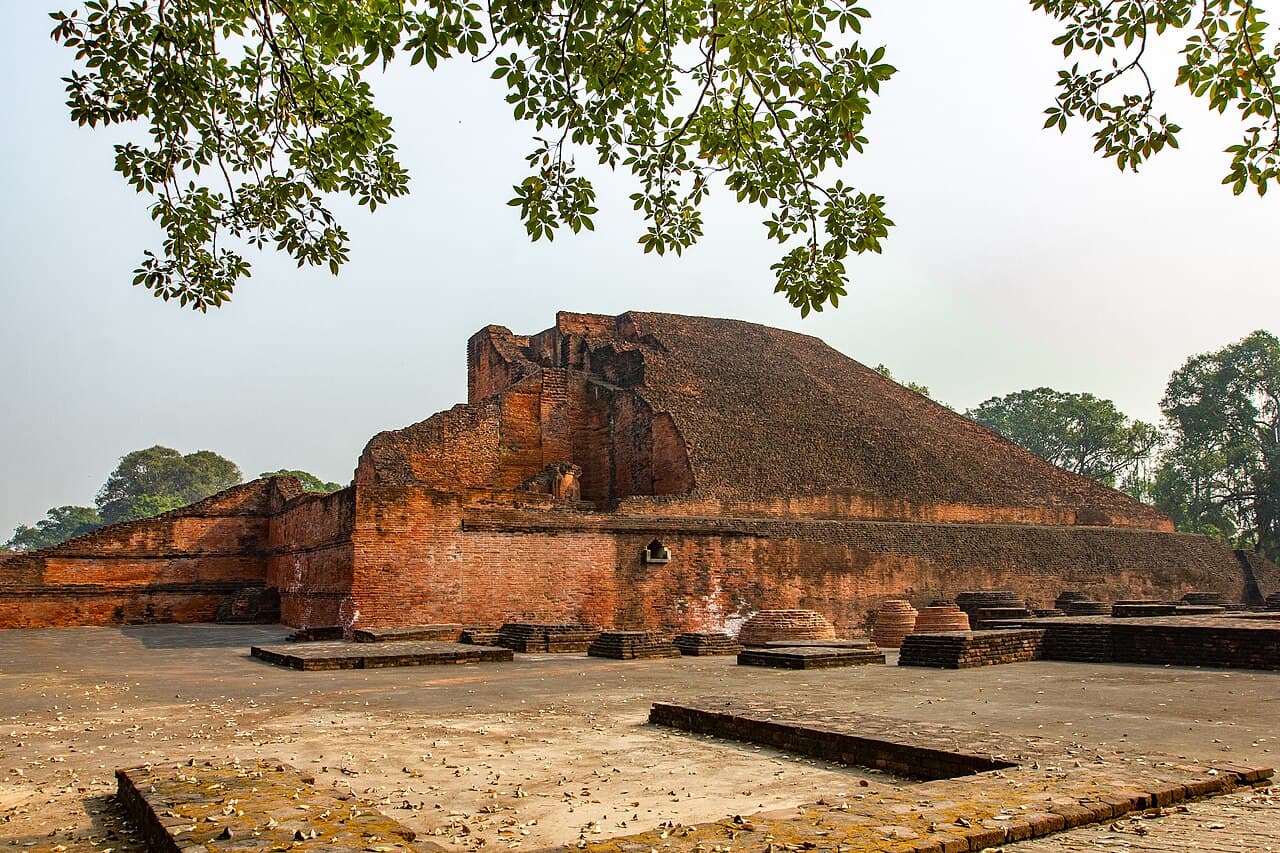
Nalanda's ruins reveal a sprawling complex built in a style typical of ancient Indian architecture, with structures made from brick and stone. The site's layout is characterized by a series of interconnected courtyards, temples, and monastic cells, reflecting its historical function as a major center of learning. The scale of the complex is impressive, with numerous stupas and shrines dotting the landscape. Ornamentation is restrained, yet elegant, with intricate carvings and sculptures adorning the walls and pillars, showcasing the skill of ancient Indian craftsmen. The overall design exudes a sense of grandeur and serenity, befitting a place that was once a hub of intellectual and spiritual pursuits.
Nalanda is a sacred site, steeped in tradition and learning. According to local belief, it was here that the great minds of ancient India gathered to seek knowledge and wisdom. Tradition holds that the site was a hub of intellectual inquiry, where scholars from far and wide came to engage in debates and discussions on the intricacies of Mahayana Buddhism. The air is said to be thick with the whispers of ancient texts, and the earth is believed to vibrate with the energy of countless hours of contemplation and study. For centuries, Nalanda was a beacon of knowledge and enlightenment, attracting patrons from across the land and beyond. Today, visitors can still feel the weight of history and the power of learning that once emanated from this hallowed ground.
Nalanda's ruins stand as a testament to India's rich academic past, a historic site that was once home to a revered centre of learning. This ancient mahavihara, located in the heart of the region, is a place where the pursuit of knowledge and the arts once thrived. Visitors can explore the remnants of a bygone era, where scholars and patrons from across the region came to engage with the greatest minds of the time. With its extensive history and cultural significance, Nalanda is a site that offers a unique glimpse into the country's intellectual and spiritual heritage, making it a worthwhile destination for those interested in history, education, and Buddhist traditions.
As you wander through the ancient ruins of Nalanda, immerse yourself in the rich history and cultural significance of this once-thriving university town. The best time to visit is early in the day, when the sun casts a warm glow over the crumbling structures and the air is filled with the sweet scent of blooming flowers. Wear comfortable shoes and clothing suitable for the Indian climate, and don't forget to bring a bottle of water and a hat to protect yourself from the sun. To get to Nalanda, you can take a bus or taxi from nearby Rajagriha or Pataliputra, or hire a local guide to show you the way. Confirm the current timings and fees for the site with local authorities or the venue directly, as these may be subject to change.