
Story
AI-drafted from public sources — may contain mistakes, especially specific dates, names, or claims. Only "Good to know" above is field-checked.
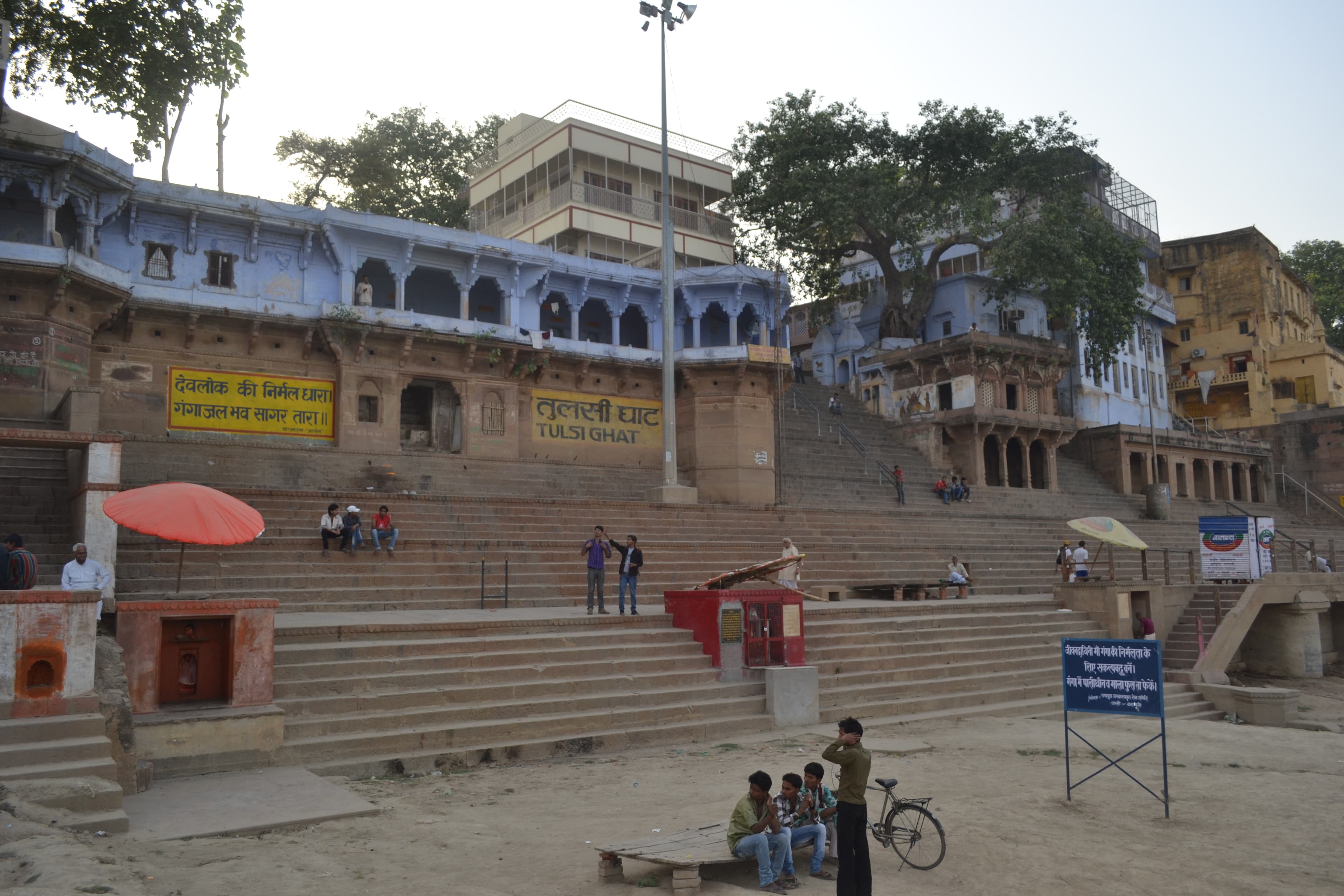
Tulsi Ghat, a sacred riverside platform in Varanasi, is a testament to the city's rich architectural heritage. The structure is built in a style typical of North Indian ghats, with a simple yet elegant design. The platform is constructed from weathered stone and marble, with intricate carvings and ornate filigree work adorning the walls. The ghat's layout is characterized by a series of stepped platforms, leading down to the Ganges River, creating a sense of gradual descent to the water's edge. The scale is modest, with a focus on functionality rather than grandeur. The overall aesthetic is one of serenity and contemplation, making Tulsi Ghat a popular spot for devotees and tourists alike.
Tulsidas lived and worked at this ghat in the 16th century; the Ramnagar Ramlila draws its text from his Ramcharitmanas.
Nag Nathaiya, held at this ghat in Kartik, re-enacts Krishna's subduing of the serpent Kaliya: a child playing Krishna dives into the river and rises standing on a representation of the serpent.
A ghat named for the poet Tulsidas, who is held to have composed the Ramcharitmanas here. It retains wrestling akhadas and evening satsangs, and is the site of the Nag Nathaiya enactment.
Tulsi Ghat, a sacred riverside promenade in Varanasi, is a must-visit for any spiritual seeker. As the sun rises, the atmosphere is filled with the sweet scent of incense and the soft chanting of mantras. The best time to visit Tulsi Ghat is early morning or late evening when the crowd is minimal and the atmosphere is serene. Wear comfortable shoes and light clothing, and bring a camera to capture the stunning views of the Ganges River. To reach Tulsi Ghat, take a stroll along the riverfront from the iconic Dashashwamedh Ghat or take a rickshaw ride from the city center. For the most up-to-date information on timings, entry fees, and other practical details, please check the app.