
Story
AI-drafted from public sources — may contain mistakes, especially specific dates, names, or claims. Only "Good to know" above is field-checked.
The image was rediscovered at Vrindavan by Rupa Goswami, a disciple of Chaitanya Mahaprabhu, and enshrined there in 1590 in a temple built by Raja Man Singh I with Akbar, who is recorded as donating the red sandstone and about 135 acres. Under Aurangzeb it was moved repeatedly for safety - Kama, Radhakund, Govindpura near Sanganer - reaching Kanak Vrindavan in 1714 and Jai Niwas in 1715.
Tradition holds the image was made by Vajranabha, Krishna's great-grandson, guided by his grandmother who had seen Krishna in life, so that it resembles Krishna's own face. It is one of three such images, with Gopinath Ji and Madan Mohan Ji. A local account holds Jai Singh vacated Suraj Mahal after dreaming it was meant for the deity.
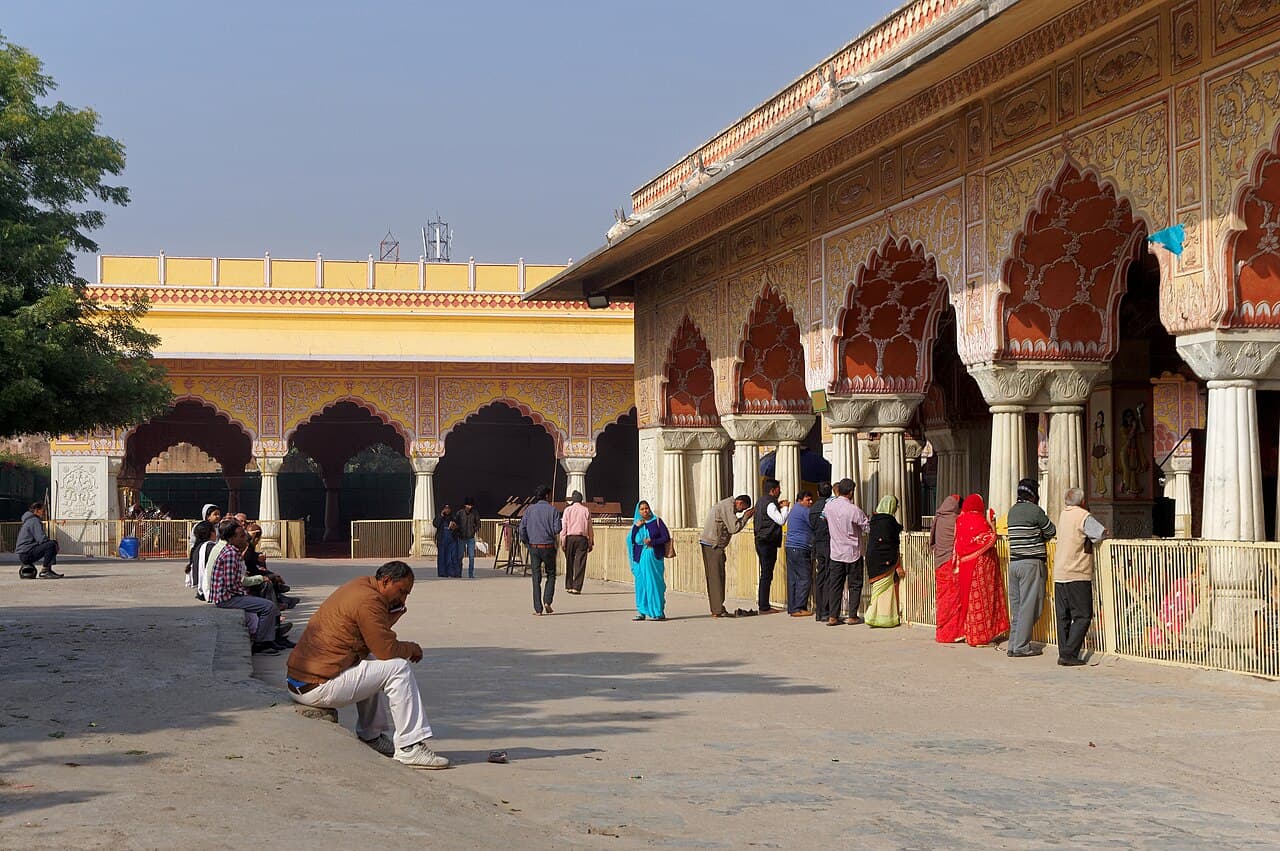
The city's principal temple, inside the palace complex, with seven aarti and bhog offerings daily. The palace is laid out so the ruler could see the deity directly from his chambers. For Jaipur this is the temple, and it is missing from your live page's highlights.