
Story
AI-drafted from public sources — may contain mistakes, especially specific dates, names, or claims. Only "Good to know" above is field-checked.
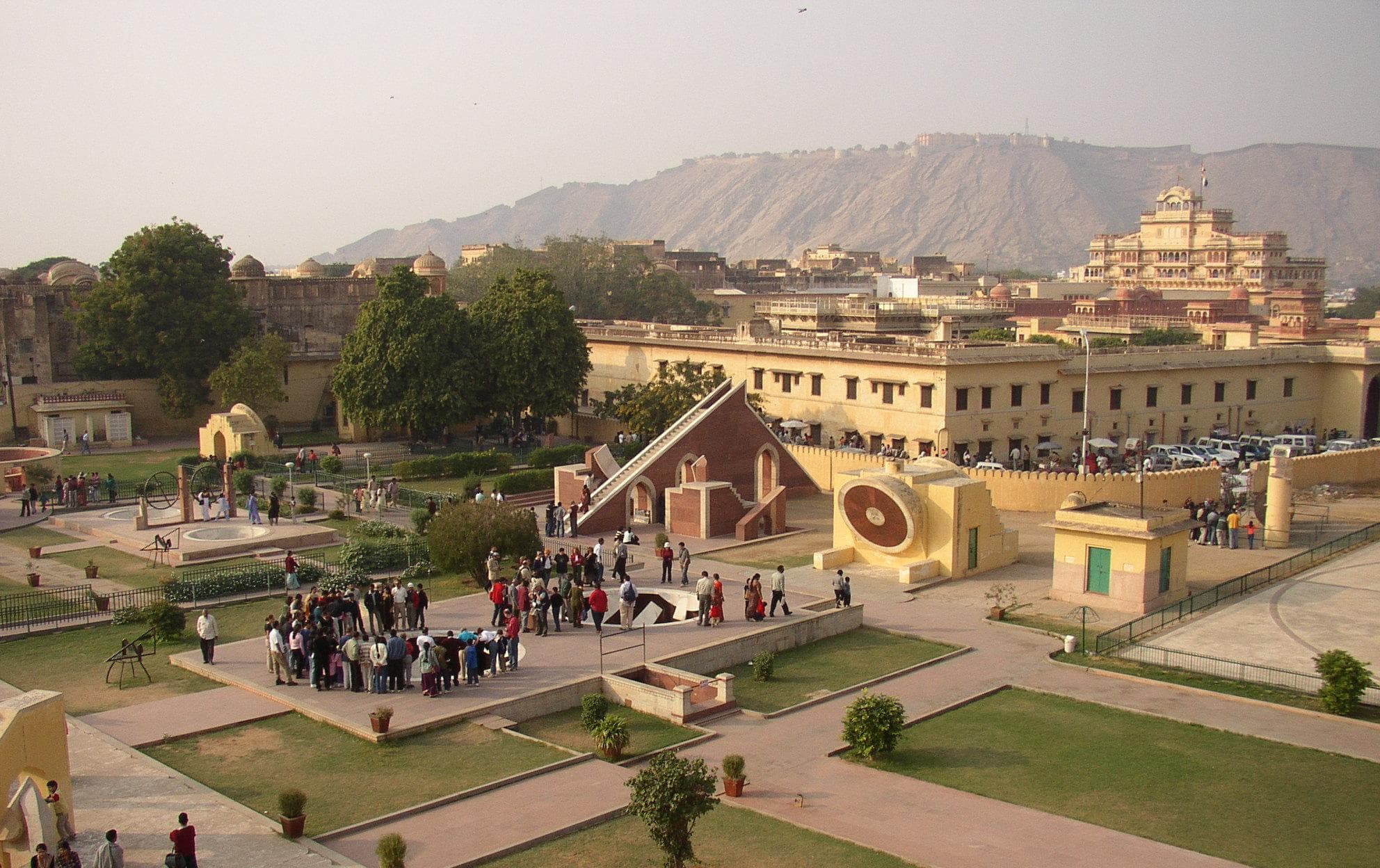
Jantar Mantar, situated in Jaipur, is an ancient astronomical observatory built in a style typical of the region's architectural heritage. The structure's imposing scale is characterized by its imposing columns and intricately carved stone facades, showcasing the region's expertise in masonry. The site's layout is designed to facilitate astronomical observations, with a series of structures and instruments carefully positioned to track celestial movements. The architecture is a blend of traditional Rajput and Mughal styles, featuring ornate carvings and intricate inlays that adorn the walls and pillars.
Jai Singh was born at Amber in 1688 and came to the throne at twelve. The observatory is the clearest surviving evidence that Jaipur was conceived as a scientific project.
In the heart of Jaipur, the ancient archaeological site of जंतर मंतर is steeped in tradition and devotion. According to local belief, the site is said to hold the essence of the city's spiritual heritage, where pilgrims and devotees converge to pay homage to the divine. Tradition holds that the site is a sacred convergence point for the energies of the universe, where the cosmic and the terrestrial meet. As the sun rises and sets, the site is said to radiate an otherworldly light, imbuing all who visit with a sense of serenity and inner peace.
A masonry astronomical observatory of large-scale instruments, including twelve Rasivalayas, built by Jai Singh II. He built instruments rather than adopting the telescope, aiming at a systematic picture of the whole sky and the systems governing it.
As you step into Jantar Mantar, a historic observatory in Jaipur, be prepared to be mesmerized by the intricate architecture and the celestial significance it holds. The best time to visit Jantar Mantar is early morning or late afternoon when the sunlight filters through the intricate carvings, casting a warm glow on the structures. Wear comfortable shoes and dress in layers as the weather can be unpredictable. It's easily accessible by public transport or a short taxi ride from the city center. Confirm the current timings and entry fees in the app before your visit, as these may be subject to change.