
Story
AI-drafted from public sources — may contain mistakes, especially specific dates, names, or claims. Only "Good to know" above is field-checked.
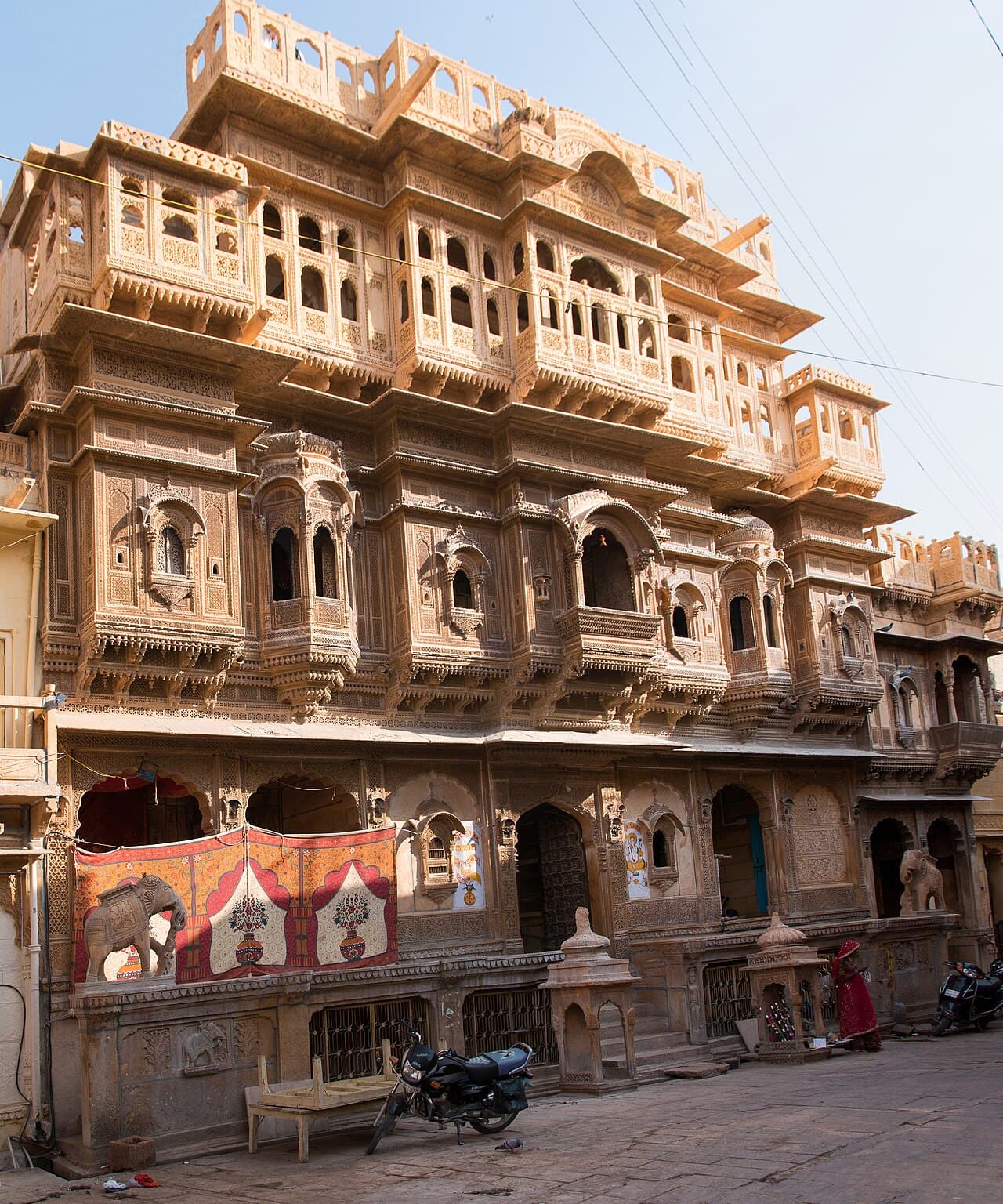
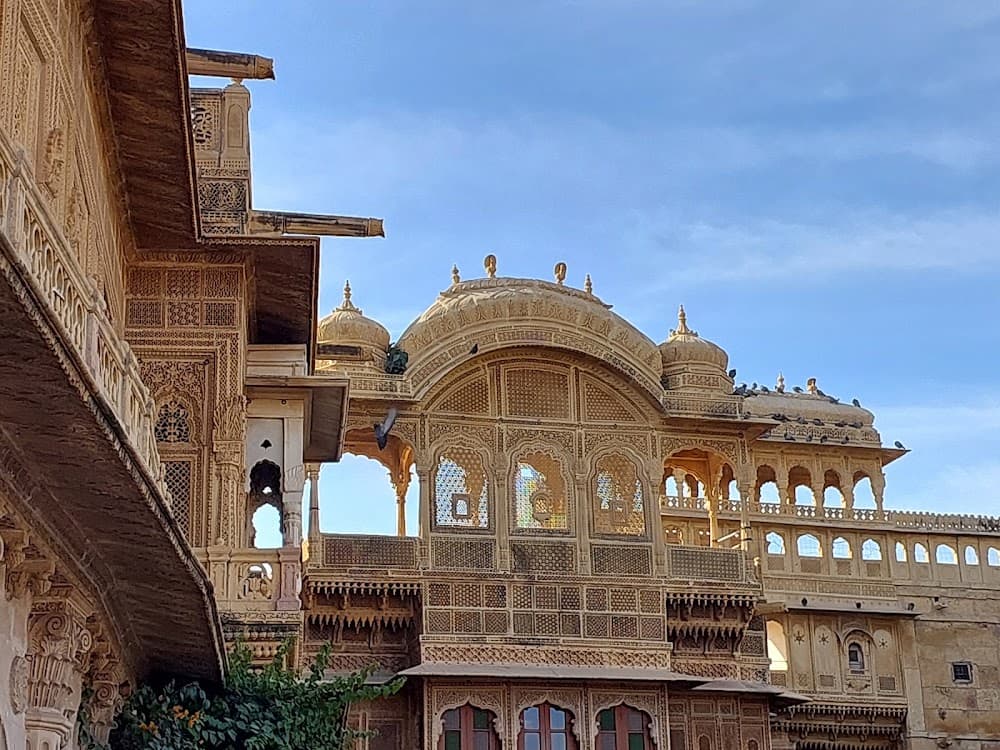
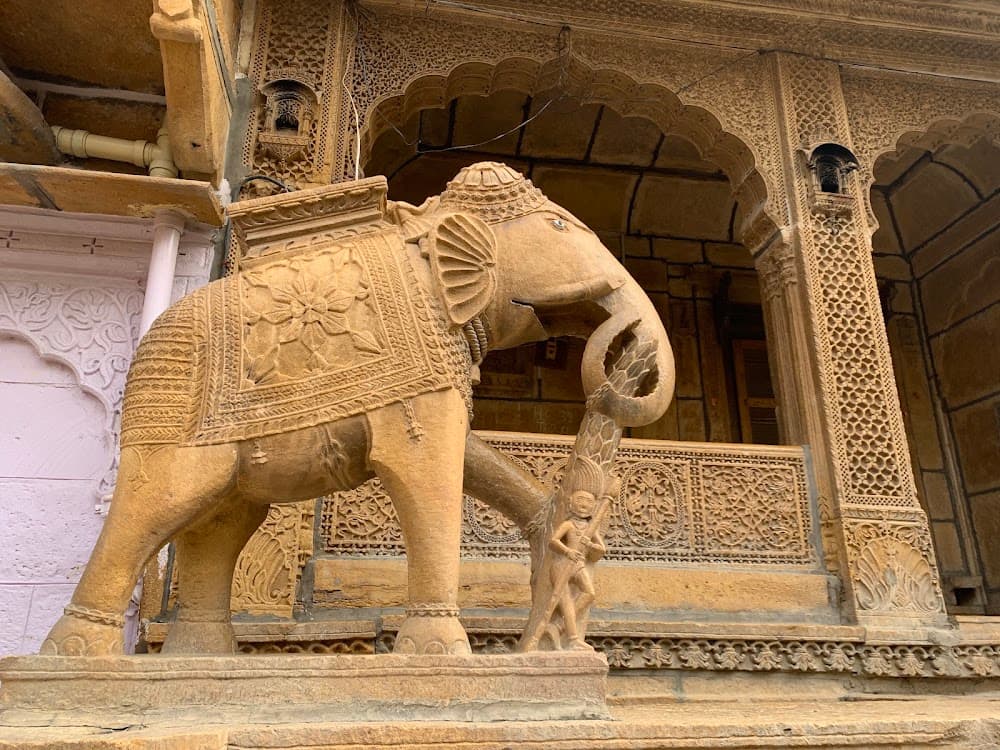
Nathmal-ki-Haveli's intricately carved façade unfolds like a tapestry of stories, its yellow sandstone walls bearing the weight of centuries. The haveli's layout is a labyrinth of narrow corridors and spacious courtyards, a testament to the ingenuity of its anonymous architects. The ornate carvings that adorn the walls, ceilings, and doorways are a masterclass in Rajputana's characteristic blend of ornateness and restraint. Delicate filigree work, floral motifs, and mythological creatures dance across the surfaces, a symphony of shapes and textures that rewards close inspection. As the setting sun casts its golden glow, the haveli's stone walls seem to come alive, its intricate patterns shimmering like the stars that twinkle in the desert night.
As one approaches Nathmal-ki-Haveli, the ornate façade of this 19th-century haveli whispers tales of a bygone era. Tradition holds that the intricate carvings and ornate archways were crafted by skilled artisans, their brushstrokes imbuing the structure with a sense of mystique. Local belief says that the haveli's labyrinthine corridors and chambers hold secrets of the past, whispers of forgotten dynasties and royal intrigues. According to legend, the haveli's intricate stone carvings are said to hold the essence of the divine, a testament to the region's deep devotion to the sacred. In this desert city, where the sun dips into the horizon, Nathmal-ki-Haveli stands as a beacon of spiritual significance, a reminder of the region's rich cultural heritage.
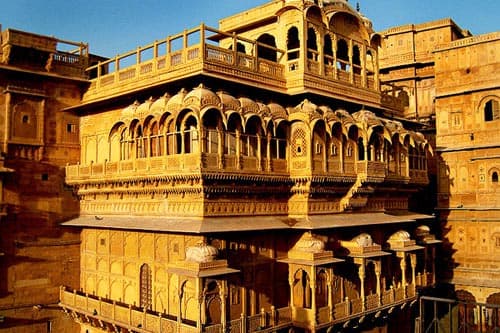
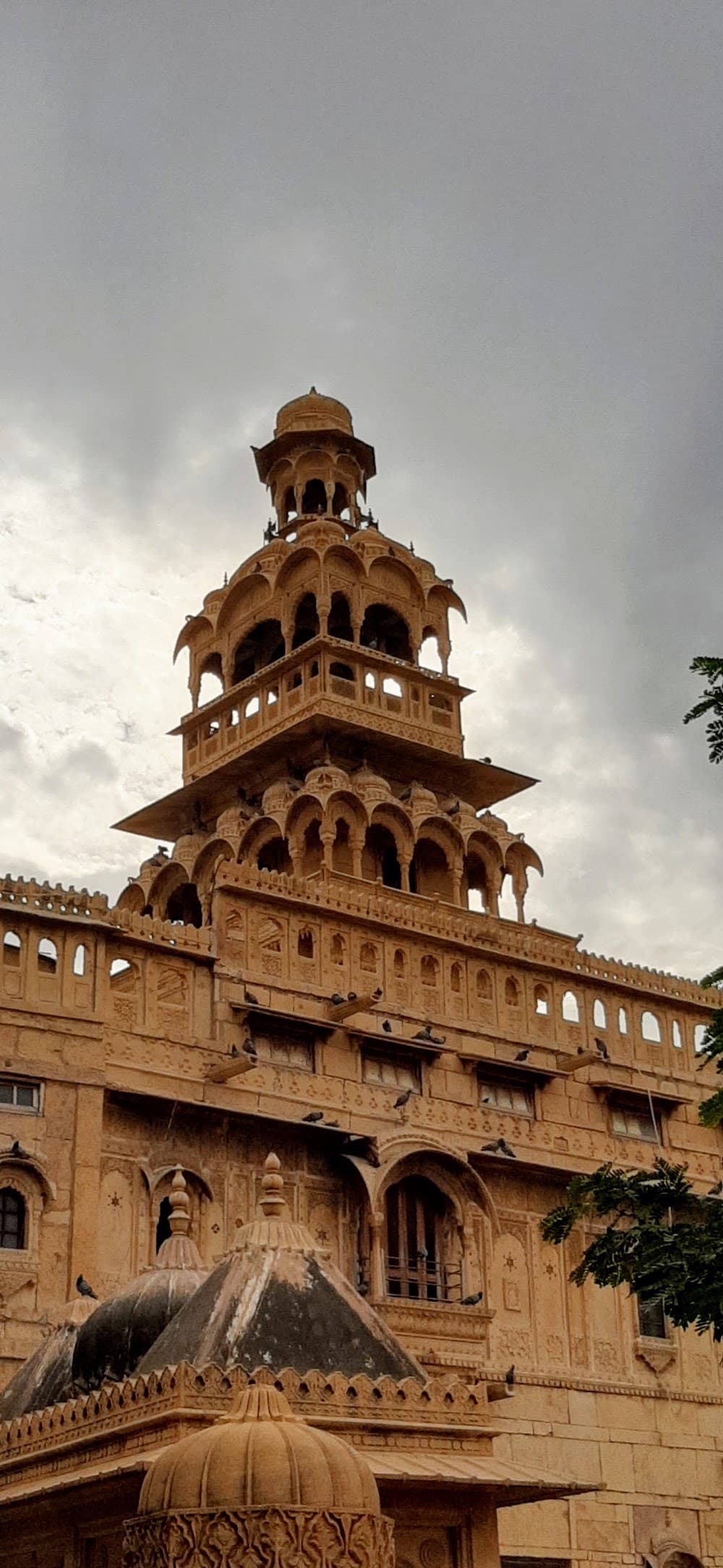
As the sun sets over the golden sands of Jaisalmer, the Nathmal-ki-Haveli's intricately carved façade comes alive, a testament to the city's rich cultural heritage. This 19th-century haveli, a traditional Indian mansion, is a masterpiece of Rajput architecture, with its ornate balconies, arched windows, and ornamental doorways. The haveli's unique blend of Mughal and Rajput styles makes it a standout attraction in the city's old town, where narrow lanes and bustling markets provide a vibrant backdrop. As you step inside, you'll discover a world of opulence and grandeur, with ornate frescoes, intricate carvings, and ornamental mirrors that transport you to a bygone era.
As you approach Nathmal-ki-Haveli, the ornate facade of this 19th-century merchant's mansion comes into view, its intricate carvings and frescoes a testament to the city's rich cultural heritage. Visitors often find themselves drawn to the haveli's serene courtyard, a tranquil oasis amidst the bustling streets of Jaisalmer. To make the most of your visit, consider arriving early in the day when the light is soft and the atmosphere is peaceful. Wear comfortable shoes and clothes suitable for the desert climate, and don't forget to bring a hat and water to protect yourself from the sun. Typically, visitors can reach Nathmal-ki-Haveli on foot or by hiring a local guide, who can provide valuable insights into the haveli's history and significance. Be sure to confirm the current timings and fees with the venue or a local guide before your visit.