
Story
AI-drafted from public sources — may contain mistakes, especially specific dates, names, or claims. Only "Good to know" above is field-checked.
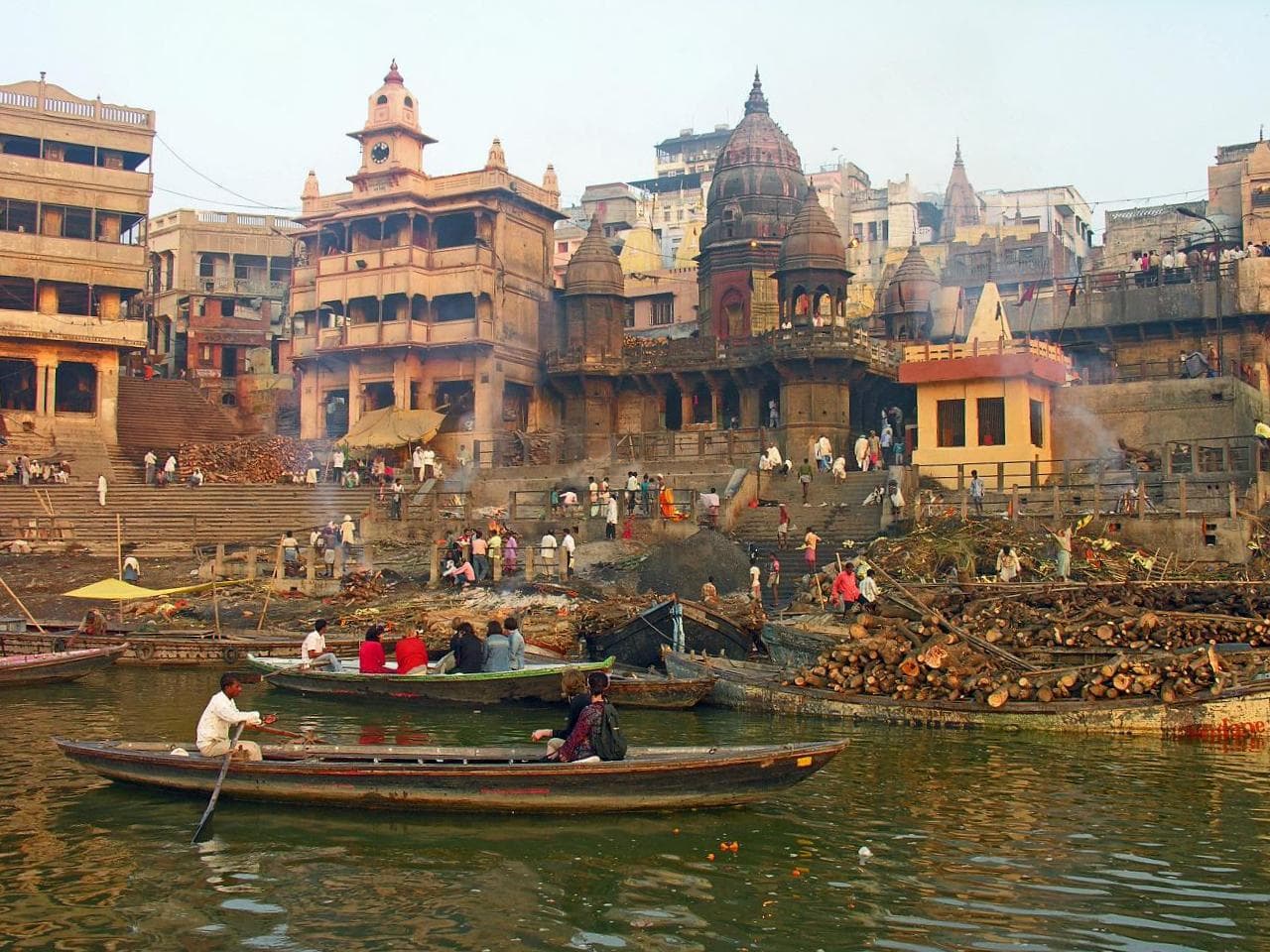
Manikarnika Ghat, a sacred riverside complex in Varanasi, is a labyrinthine expanse of intricately carved stone and marble. The ghat's stepped platform, worn smooth by centuries of devotion, descends gently into the Ganges River. The ornate facades of the temples and shrines that line the ghat's periphery are adorned with intricate carvings, depicting mythological scenes and divine figures. The ghat's architectural style is characteristic of North Indian temples, with a blend of ancient and medieval influences evident in the ornate stone carvings and the use of red sandstone and white marble.
The cremation site in its present form is recorded as constructed in 1775.
Tradition holds Vishnu dug the tank here with his chakra and that an earring of Shiva or Parvati fell into it, giving the ghat its name. Shiva is said to whisper the taraka mantra into the ear of each person who dies at Kashi.
The principal cremation ghat of Varanasi, where pyres burn continuously. It is the physical expression of the city's central belief that death here releases the soul from rebirth.