
Story
AI-drafted from public sources — may contain mistakes, especially specific dates, names, or claims. Only "Good to know" above is field-checked.
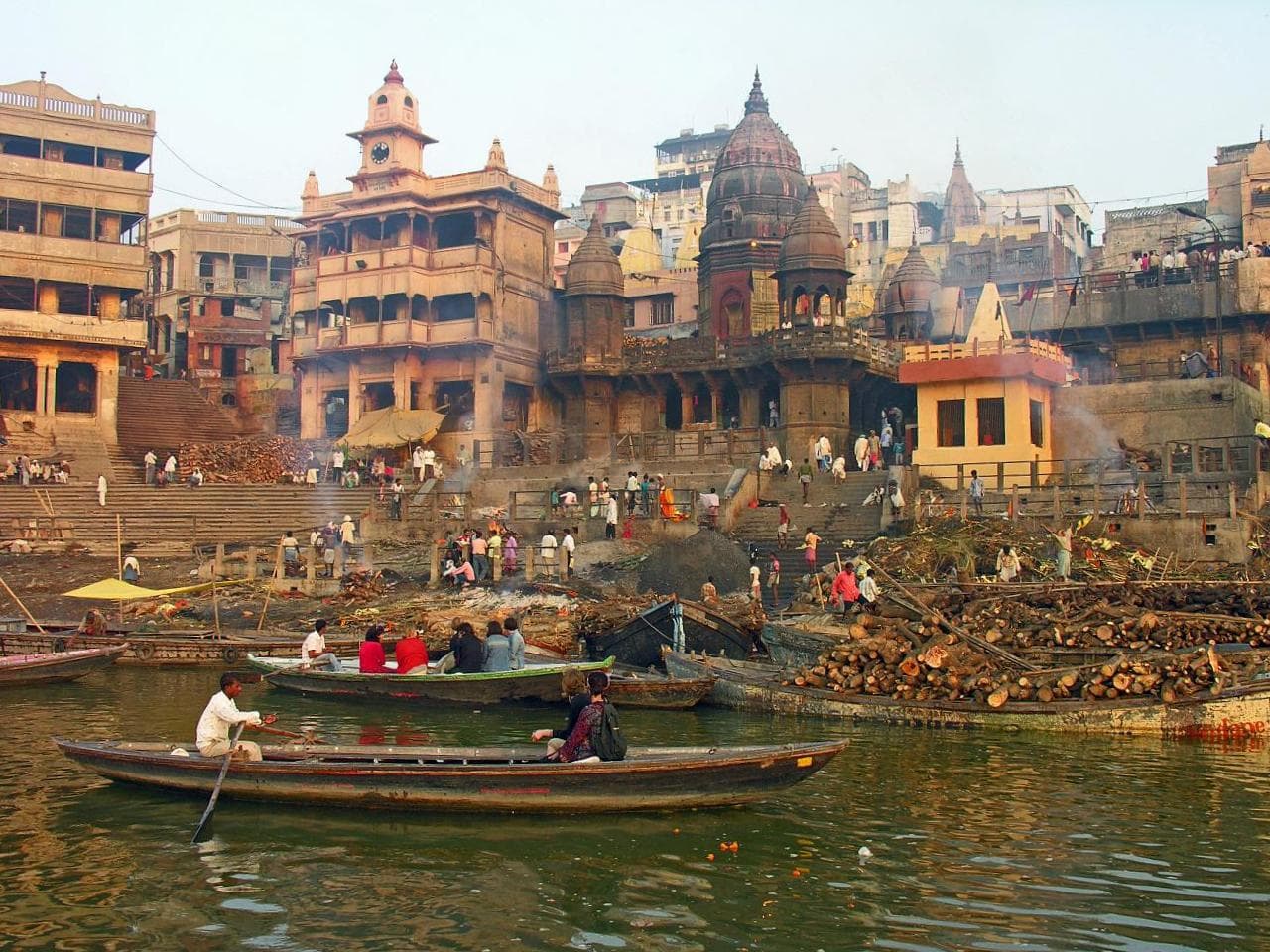
The cremation site in its present form is recorded as constructed in 1775.
Tradition holds Vishnu dug the tank here with his chakra and that an earring of Shiva or Parvati fell into it, giving the ghat its name. Shiva is said to whisper the taraka mantra into the ear of each person who dies at Kashi.
The principal cremation ghat of Varanasi, where pyres burn continuously. It is the physical expression of the city's central belief that death here releases the soul from rebirth.
Manikarnika Kund lies on the ghat, and the leaning Ratneshwar Mahadev Temple stands beside it.
As the sun rises over the Ganges, Manikarnika Ghat comes alive with the sounds of chanting and the aroma of incense. This sacred spot is a must-visit for any traveler to Varanasi. To make the most of your experience, consider visiting early in the morning or late in the evening when the atmosphere is most serene. Dress modestly and be prepared to remove your shoes as you explore the ghats. Wear comfortable clothing and sturdy shoes, as the terrain can be uneven. You can reach Manikarnika Ghat by crossing the street from the famous Dashashwamedh Ghat or by taking a rickshaw from the city center. For the most up-to-date information on timings and fees, we recommend checking the app or consulting with a local guide.
Etiquette: please do not photograph the pyres.