
Story
AI-drafted from public sources — may contain mistakes, especially specific dates, names, or claims. Only "Good to know" above is field-checked.
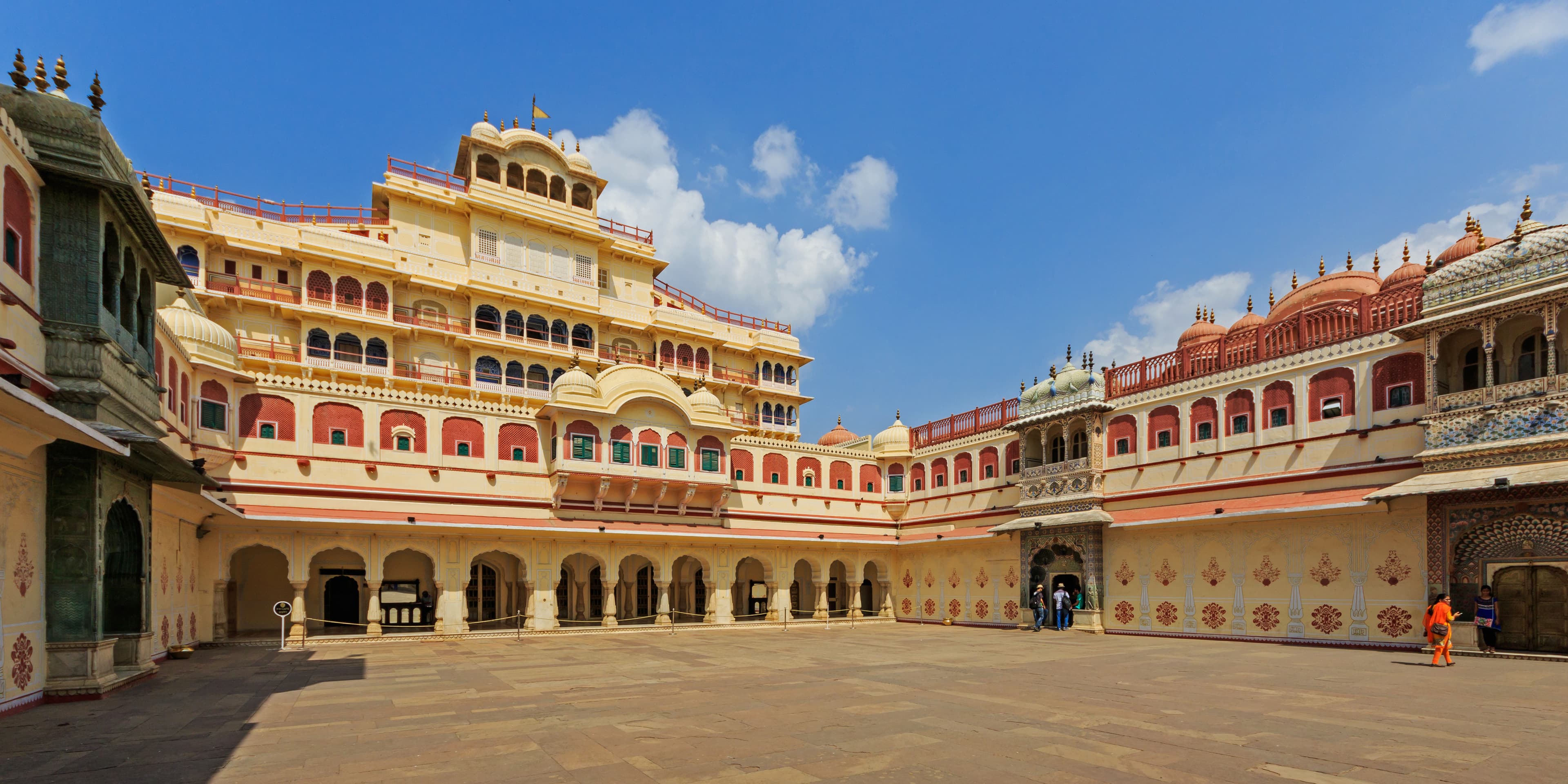
The City Palace, a majestic fort in Jaipur, is a testament to the region's architectural grandeur. Built in a style typical of Rajput palaces, the palace's structure is a blend of traditional and modern elements. The fort's exterior is characterized by a fusion of pink and cream-colored stones, intricately carved with ornate filigree work and delicate floral patterns. The palace's layout is a maze of grand halls, ornate chambers, and majestic courtyards, with a subtle emphasis on symmetry and balance. The scale is grandiose, with imposing arches, sweeping staircases, and majestic domes that evoke a sense of regality.
A later addition to the palace complex was designed by Sir Samuel Swinton Jacob, the engineer-architect also associated with Albert Hall.
The City Palace, a majestic fort in Jaipur, is steeped in tradition and local belief. According to local lore, the palace is said to be a sacred site, a testament to the devotion of the Mewar rulers who once called it home. Tradition holds that the palace was built as a symbol of their devotion to the gods, and that its intricate architecture and stunning frescoes are a reflection of their spiritual pursuits. Local belief says that the palace is a place of great spiritual power, where the energies of the gods are said to be palpable. As such, it is a place of great reverence and devotion, where pilgrims and devotees come to seek blessings and guidance.
The royal complex at the centre of the grid, still partly the residence of the titular Maharaja. Contains the Govind Dev Ji temple, Chandra Mahal, Badal Mahal and the museum. Its central placement is a consequence of the plan, not of preference.
As you approach the City Palace in Jaipur, the majestic architecture and vibrant colors of the city's iconic landmark will leave you in awe. To make the most of your visit, consider arriving early in the morning or late in the evening when the sun is not too harsh. Wear comfortable shoes and clothes suitable for the Indian climate, and don't forget to bring a hat and sunglasses for added protection. The palace is easily accessible by taxi, auto-rickshaw, or even on foot, depending on your starting point. Once you're there, take your time to explore the intricate courtyards, ornate pavilions, and stunning murals that tell the story of Jaipur's rich history. Be sure to check the current timings and fees for the palace in your app before your visit, as these may be subject to change.